Talk about the actual record 丨 Liu Shouying × Zhou Feizhou: the land system and the real world
Author:China Renmin University Press Time:2022.09.01
Observation News (2022-08-29). If reproduced, please indicate source.
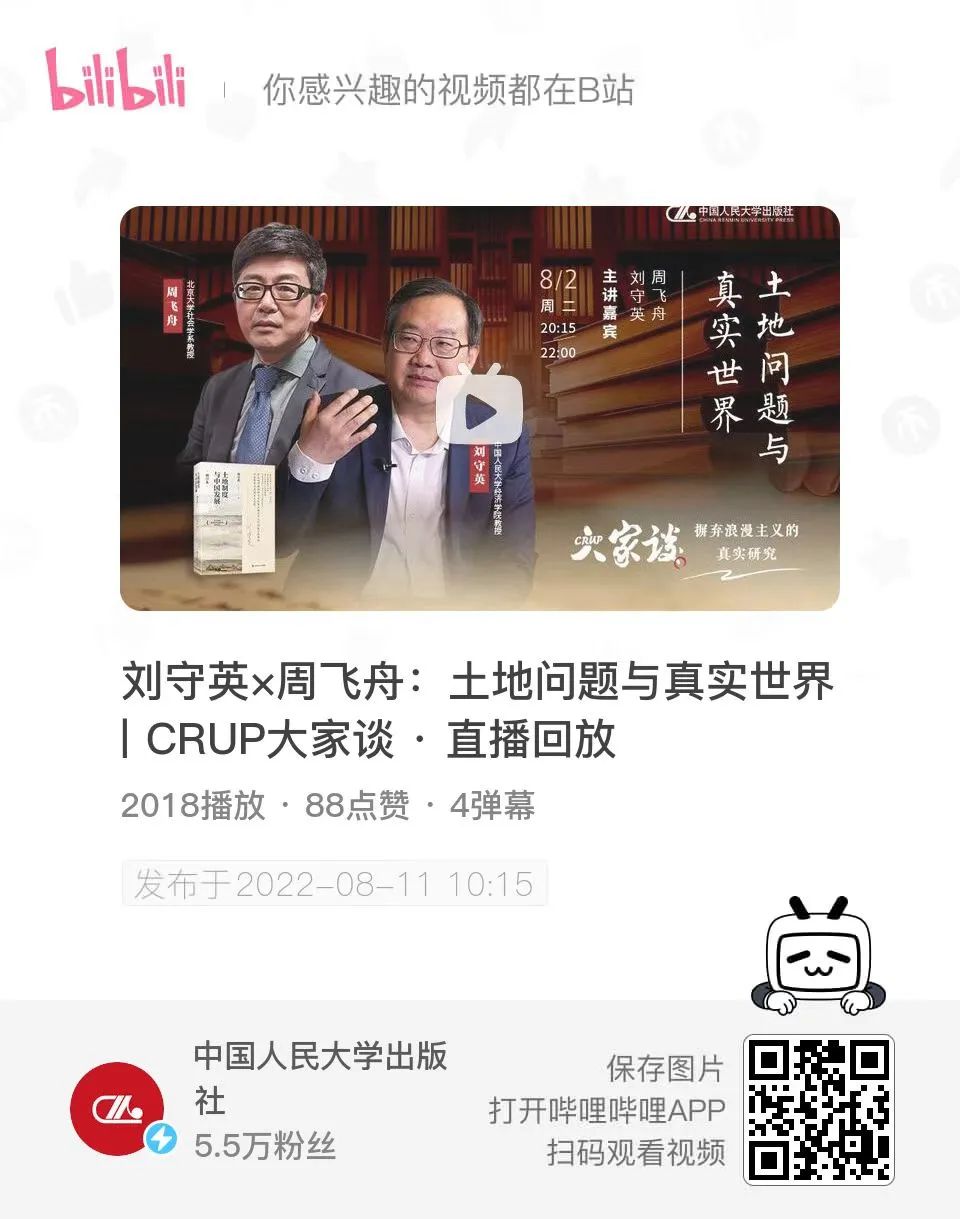
Full live broadcast back, please scan the code to watch
The system is not to say that we want to change, nor our subjective feels that this system is not good. The key to institutional reform is: Why should I change it and what are the benefits after changing? Can I change it now?
Wen | Jianghai
In 1988, Liu Shouying graduated from Shanghai Fudan University to the development of the Rural Development Research Center of the State Council in Beijing, and began to study China's land issue. This has been pierced for more than 30 years. Of course, for more than 30 years, he has been trying to do some other issues to study, "avoiding it as if I only understand land issues."
However, there is no doubt that the research on the land system is still the deepest cultivation of Liu Shouying and the source of his most respected in the industry -last year he won the most influential Sun Yefang Economic Science Award for the Chinese economy.
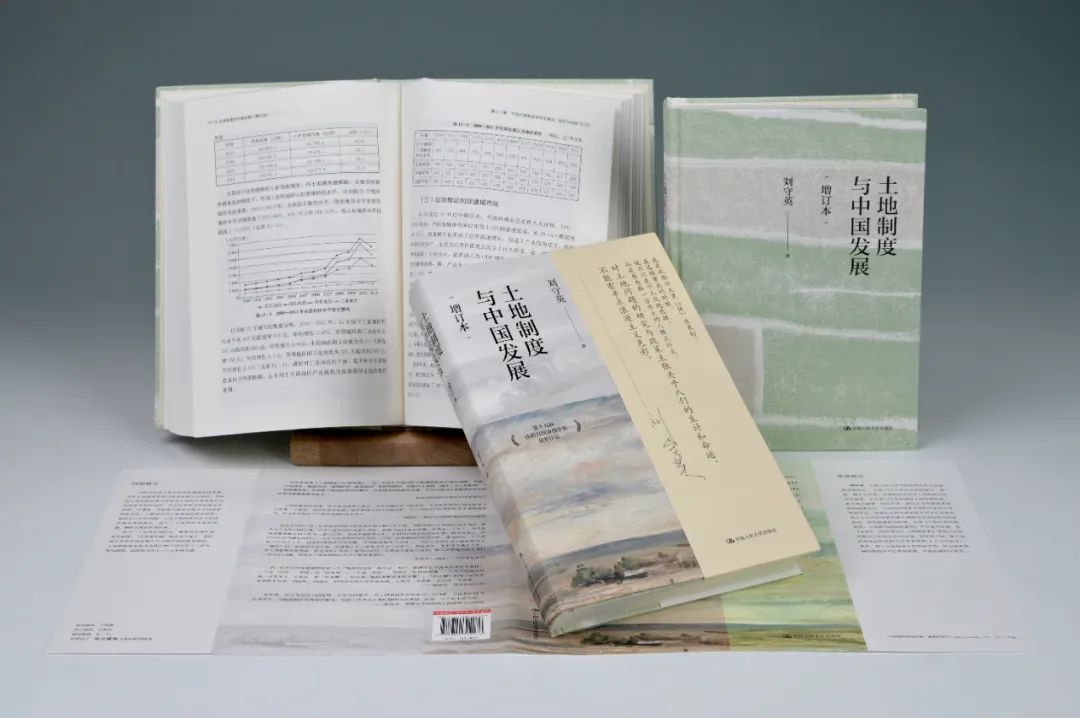
Recently, Renmin University of China Publishing House published "Land System and China Development (Adding Book)" by Professor Liu Shouying, Dean of the School of Economics, Renmin University of China. In this book, he tried to answer: In terms of the uniqueness of a global and China's development, what role does the land system play in the process of China's economic and social transformation in the past 40 years?
Generally speaking, studying land issues is easy to limit it to a certain discipline, such as agricultural economy and land economy, but from the actual development of China for more than 40 years, land is a global issue. It involves the transformation of a large country in China- — From agricultural society to industrial society; China has changed from a planned system to the market system, and the land system also plays a very important role. In addition, China's "development miracle" -when Liu Shouying first started to enter the society more than 40 years ago, he did not expect that China would have such a high -speed economic development today -the high speed of economic growth, rapid industrialization and urbanization. China's land finance and land financing and real estate are closely related to land.
Liu Shouying summarized the uniqueness of China's development in China in the past 30 years as the "development of the ground" model -local governments relied on it, and the owners of urban people could not be separated from it. China's financial and fiscal operations The ground is associated together. "In other words, China's land system actually runs through China's economic growth and China's structural transformation, China's development model and future roads." This model cannot be transformed, then China will be very difficult to enter the new development model. Taking advantage of the new version of the book, on the evening of August 2 -the night when the whole people were concerned about whether an aircraft could land at Taipei Airport, Liu Shouying and the director of the Sociology Department of Peking University started offline talks around land issues, 17.7 Thousands of people watch online. The topic of the talk is "Land System and Real World" - "Because of the land problems we saw at first, the land problem you wanted to investigate, it was not like this at all, but the land problems that finally saw in the real world may be China. The most basic and most original issue. "Liu Shouying said.
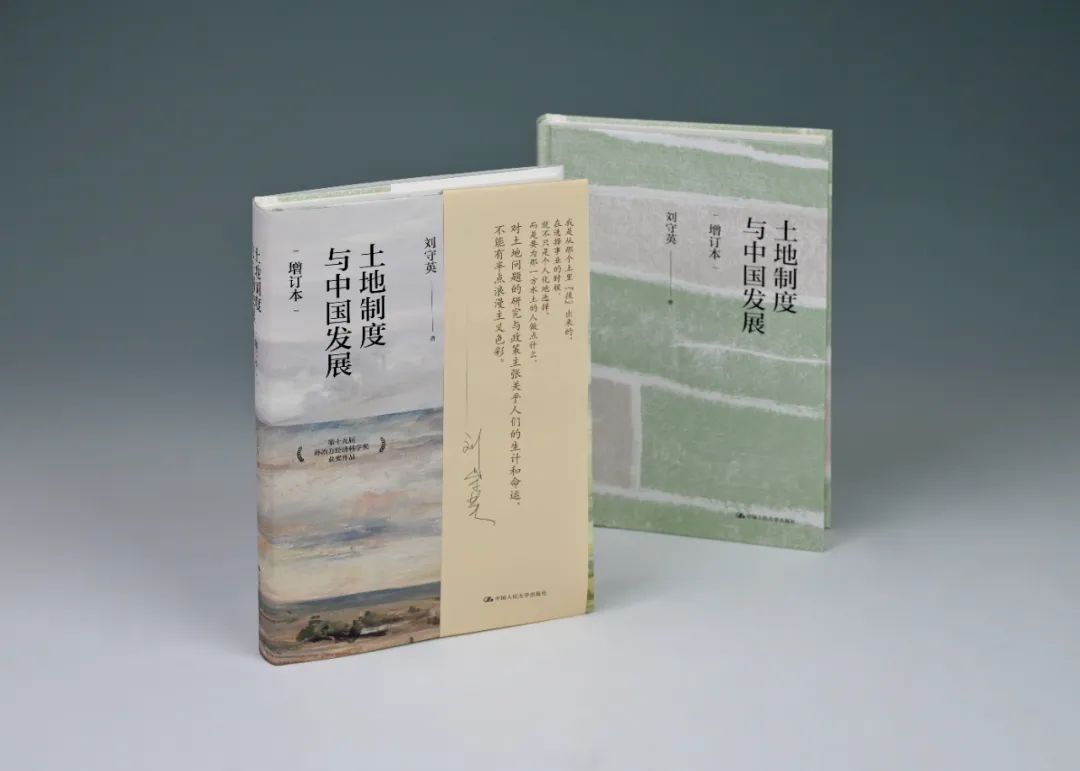
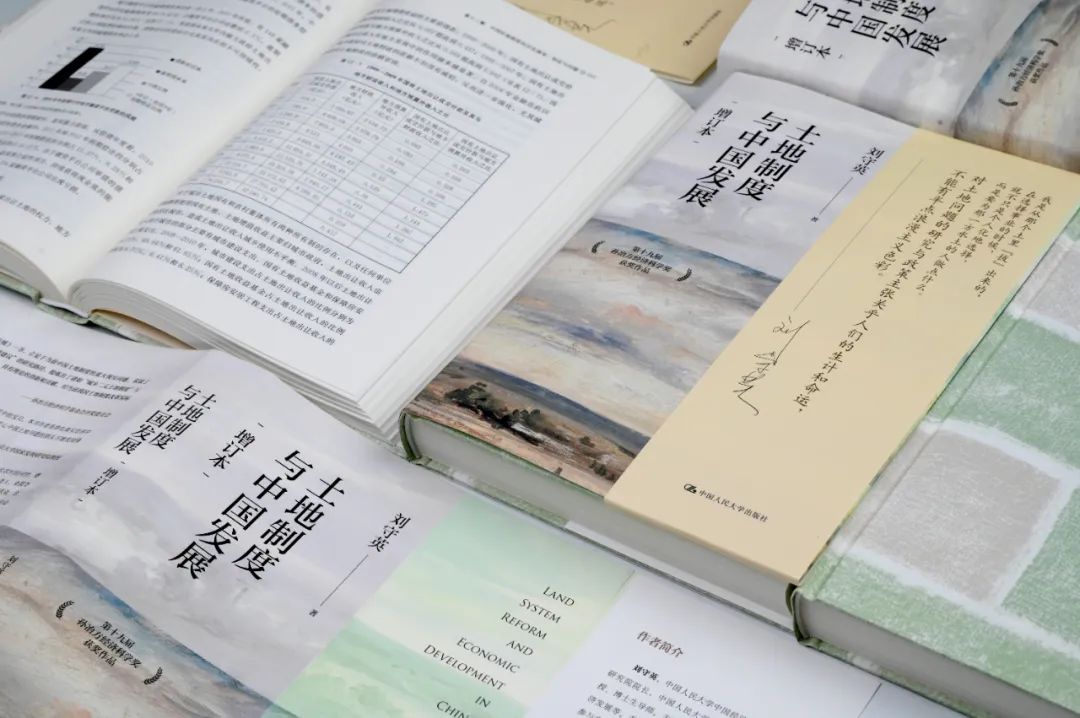
"Land System and China Development (Adding Book)"
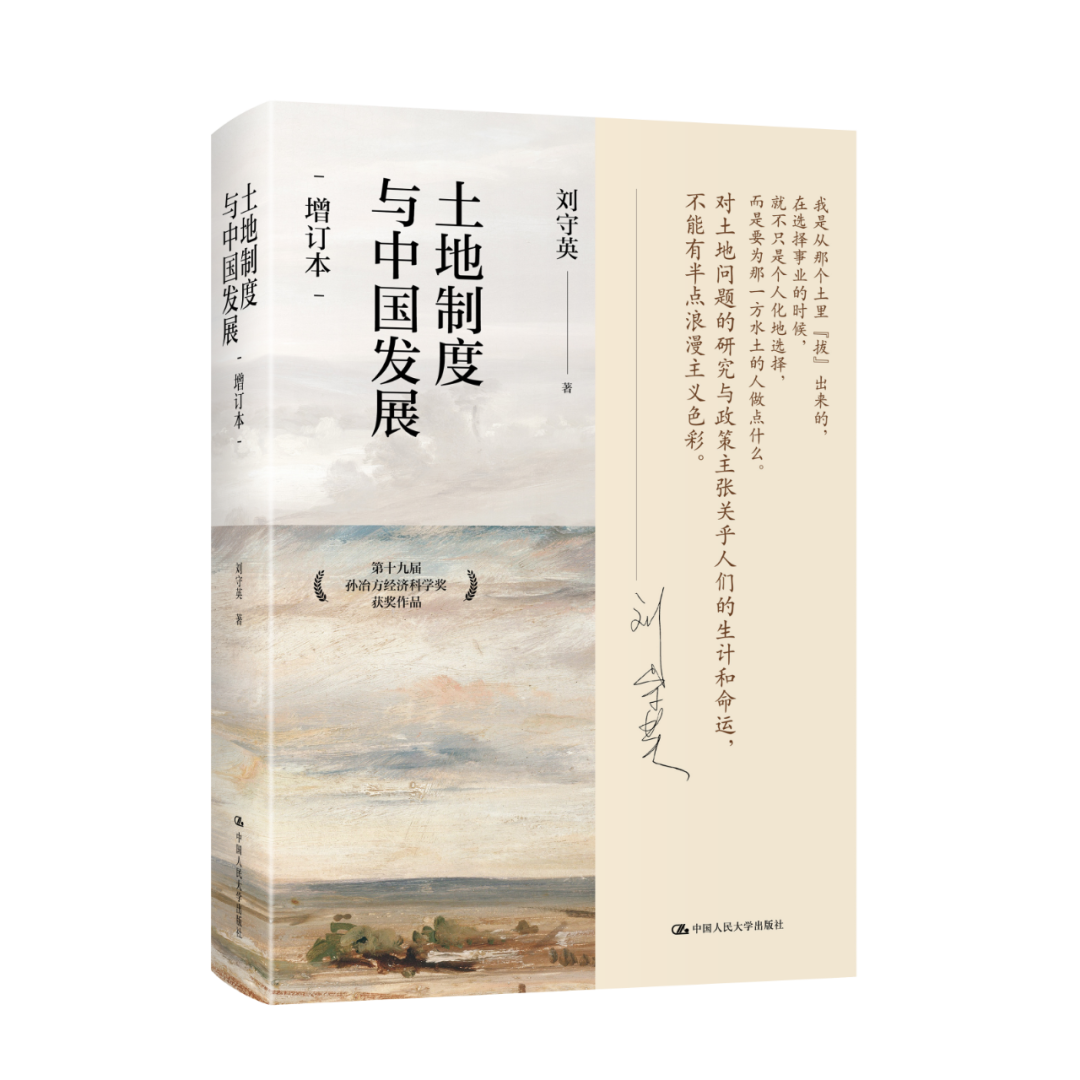
Liu Shouying/
China Renmin University Press
July 2022
1
Land acquisition and land capitalization:
The key password of Chinese urbanization
Moderator: When you just graduated from 1988 to enter the development of land issues research on the development of the Rural Development Research Center of the State Council, China has just separated from the planned economy. How China has transformed from the land system of the planned economy to the present. The land system that develops with the land "?
Liu Shouying: I first paid attention to China's land issues in 1988, mainly in rural land issues. After China's original land system, which is dominated by the agricultural land system, has gone through the reform of the Baocai system in the early 1980s. In the mid -1980s, the potential of the mid -1980s has reached its limit - This institutional arrangement has basically been shaped by 1984 and 85. The next problem is: a large number of rural surplus labor force will be analyzed from the original agricultural land system. China actually started a great structural transformation: how farmers leave the original land to engage in non -agricultural employment.
When township enterprises began to flourish, farmers from the original use of the reform effect of the agricultural land system to solve the change of eating and income to the use of non -agricultural land in rural areas to engage in non -agricultural industries and small towns. At this time, the land system innovation of rural non -agricultural land was actually opened -collective use of construction land to engage in the development of township enterprises, and using small towns to start the city. At this time, the deep problem of China's structural transformation has begun: the city's system cannot support the large -scale flow of farmers -farmers enter the city. At this time, the obstacles of the urban land system have begun to show, but it is not obvious. When did it start? It started from a large -scale urbanization in the late 1990s.
After the large -scale urbanization curtain is opened, the land of a large number of farmers is requisitioned, but what does the value -added interest from the land from farmland to urban non -agricultural construction land have to do with farmers? What is the relationship between urban expansion brought about by China's urbanization after implementing the collection system? This issue began to emerge in the late 1990s, bringing out two basic propositions: first, how to support the modernization of farmers in the rural land system arrangement of China; second, how the land system for cities support China's transformation, urbanization, and industrialization process. These two issues have been trapped in the modernization process of China for more than 40 years. The land system built during this period has basically laid the fundamental fundamental aspect of land issues in China.
Moderator: In the process of the transformation of the Chinese land system, how did you step by step towards the situation of "bidding and patting" in this urban land? So that land costs occupy such a high proportion of the entire real estate price.
Liu Shouying: The land problem in the city is reflected only when the urbanization is expanding rapidly. After 2000, we started to go to Zhejiang, Later in Shaanxi, and Chongqing. One of the basic phenomena we saw was the large -scale expansion of the city. For example, in Yiwu, in 1984, there were few people in the city; by 1994, the scale of the city was expanded many times; after 2000, it became a large international city.
During the expansion of the city, where did the Chinese cities from the county level come from? I remember that we were investigating in Zhejiang at the time that there were only a few hundred acres of land indicators that the central government could use a county, but the scale of these cities was more than 10 times more. Where did the land come from? During the survey, it was found that the land acquisition system played a very important role in the rapid expansion of Chinese cities -agricultural land transferred to non -agricultural land, and the land acquisition was compensated according to the original purpose, and the local governments could easily get the land at a very low price. In this case, why don't the government do not expand the city? This is the first question: China's land acquisition system.
The second question: How can the local government have such a high enthusiasm to do this? This is related to its development momentum -local governments in China are not optional in economic development. It is an engine and a force to promote economic development. With this land acquisition system, local governments have the driving force for development, and the land system naturally becomes a tool for local governments.
Third question: Land Capital -How can China's land system get so much money for the city government? This is a very important thing. By the end of the 1990s, you went to the place to see that China's urban expansion was very large and beautiful, and road landscapes and high -rise buildings. But where does money come from? During the planned economy period, our entire land was used for free (once we investigated in Shandong, there is a street in that county, which is the original supply and marketing cooperative. How does this place come from? It was a street land); in 2003, the state allowed operating land (including residential land) to "bidding and hanging" -the land required by the local government from farmers, and he exclusively "bidded" and bought land. They are all engaged in business, real estate, and use high prices. Local governments can obtain an important source of urban construction funds through this system -that is, the capitalization of land. In 2008, in order to deal with the global financial crisis and allow local governments to use land to mortgage loans, it is even more powerful -it turns out that I can collect mortgage financing when I recruit a piece of land, that is to get the bank's money with land. This is an important password for China's urbanization, and it is also the most important set of institutional arrangements for the Chinese land system to play a wonderful effect here. 2
Next, you need to solve urban residents
Can obtain the right to live at a reasonable price
Moderator: What does Teacher Zhou think and evaluate this land system?
Zhou Feizhou: Teacher Liu has characterized China's development in the past 30 years as "developing with the ground" and summarized very well. The foundation of this model is the land system that is separated by the urban -rural separation of the urban and rural separation of rural land and urban state -owned land in the 30 years before China's reform and opening up. It is a dual -track system and two different systems. Since the reform and opening up, the dual -track system has played a very important role in urban development and industrialization -low -cost urbanization and low -cost industrialization. After the reform and opening up, there were two waves of industrialized climax: one wave was a township enterprise in the 1980s, and the other wave was the "World Factory" formed after the 1990s. The core of these two waves of industrialization is low on the land.
This dual land system has formed a "land acquisition system" for paid use of land in China -a large number of differences in land leases have been generated in the middle of the land acquisition process, which belongs to the government's fiscal revenue. On this basis, a set of land capitalization mechanisms have been established -land mortgage financing supports large -scale urban infrastructure construction. Infrastructure construction is mainly supported by land finance and land financing. In this way, our development model is actually a considerable part of the level of lease of the level of the level into infrastructure construction. One of the important contributions of this book is to reveal this, which is an important feature of the urbanization of socialist urbanization with Chinese characteristics.
Liu Shouying: This is very important for Feizhou to talk about: how can the local China talk about how to transform into a pattern of urban and rural China, and what role does the land play. I have been trying to answer this question in this book.
There is no wealth in the local Chinese society, but a large amount of wealth is buried in the soil -one is the land rental part of the landlord, and the other is that the capital accumulated in the city also returns to buy land. If a society is buried in the soil, this society has no hope. China ’s public land system from land reform to cooperation (based on this, and later established a binary land system), in fact, the capital that was originally buried in the soil was precipitated and turned into industry and industry and industry and industry and industry Capital for urban development.
For example, the land reform basically exactly the capital of the original land food and interest class to become the ownership of farmers, and rely on land to absorb capital. During the collective period, a large amount of land surplus to the industry has played a very important role in China's industrialization.
Now there are many criticisms for this dual land system -mainly aimed at the unequal distribution of urban and rural areas in the interests of the land, but the capital formed by relying on the dual land system also needs to be concerned that What did the income use? If it is in an elite society, it may become the land food profit of the Elite Group. In the 1920s, a large number of land problems were also land problems during high -speed industrialization urbanization; During the formation process, this set of dual land system plays the role of land capitalization. In fact, it ensures that the benefits of our large amount of land capitalization are used in industrialization and urbanization. Of course In the case of, land conspiracy has developed. Therefore, when studying Chinese issues, it depends on which are unique, and then evaluate the positive and negative consequences of these unique institutional arrangements.
Generally speaking, the development of China for more than 40 years, a mystery is where capital has come from. Without land, how can Chinese cities be built like this? How can China's industrialization be this step? This is what I said, we need to look at the system in history.
Moderator: Just now the two teachers believe that the nature change of the nature of the land acquisition of the binary land system in China and the capitalization of the grade landless land are the core password of the socialist urbanization and industrial take -off of Chinese characteristics; but if you change the perspective, From the perspective of an ordinary person, will he think that this is the main reason for high house prices?
Liu Shouying: This is a problem.就身处社会转型中的一个老百姓来讲,首先是他身份的转变——如果这个社会所有的人都是农民,那肯定就是乡土中国;这个社会首先要实现的是农民身份转变,也就是农民Have employment opportunities. We are investigating local investigations before the 1980s and the late 1990s. The most concerned is employment opportunities. After the Zhejiang Township Enterprises in Jiangsu got up, farmers had non -agricultural employment opportunities. Later, like the late 1990s, we went to investigate, to see the flowing place, to see these people work in the factory, and then see the farmers' outflow, whether there is remittance returned. This stage is actually a stage of the transformation of China's industrialization structure. China's land system has played a very important role in ensuring China's long -term industrialization and low cost. Under the basically restrictions on the scarcity of land in China, industrial land can ensure low -cost supply for a long time. Until now, the cost of industrial land is still very low. Although this kind of land is required to implement bidding and pickers; if the land costs are high, it will affect the industrial industry. Competitiveness. In the stage of structural transformation of high -speed industrialization, for individuals, without this set of industrialization, farmers' non -agricultural employment and their identity change would be difficult to achieve.
The other is the problem of urbanization. Of course, everyone now says high house prices. But this matter should be objective. For example, when I came back from the United States in the late 1990s, I would have a wish: if there is a three -bedroom room and a Santana, I am very happy. Why is it a three -bedroom room? There is a space for living and a study. There was a place where there was a place to live at that time, which was harder than the heaven! what is the reason? In the past planned economy period, the system of the planned economy could not solve the problem of residential rights, which was allocated at the level. Under this system, housing is always a shortage. That is to say, the market -oriented reform of China's land and real estate is very important -to solve most people and those who have the ability to buy through the market to realize their right to residence. Compared with the original planning distribution, it is a progress.
Had house prices have to do with this system of China? It is related. There are two impacts of residential land on house prices: first, only a part of the entire construction land (30%) is used for residential, which is a structural problem; the other is that residential land is "bidding and hanging", but other land is not used in use. With the "bidding and hanging hanging" system, the residential land "bidding and hanging" will naturally bring the price of the entire residential land, thereby pushing up house prices.
China's current market -oriented system is to solve the problem of residential rights of people with the ability to buy. Next, it is necessary to solve the problem of residents in a city that can obtain residence rights at reasonable prices. For the solution of this problem, the land market needs to be further reforming: first, the structural problem must be solved, why only 30 % of the land is used for residential; second, why the residential land uses only the government exclusively "bidding and hanging hanging, hanging, hanging, hanging, hanging, hanging, hanging, hanging, hanging, hanging, hanging, hanging, hanging, hanging, hanging, hanging, hanging, hanging, hanging, hanging, hanging, hanging, hanging, hanging, hanging, hanging, hanging, hanging, hanging, hanging, hanging, hanging, hanging, hanging, hanging, hanging, hanging, hanging, hanging, hanging and hanging, "Supply this way?
3
Be wary of the planned economic color
Collective Economic Return
Moderator: A country's transformation from local society to industrialized urbanization may be a common phenomenon of worldwide. In the process, what are the common land issues? What are the issues of Chinese characteristics?
Zhou Feizhou: The issue of the land system with Chinese characteristics is that one is the dual separation of urban and rural areas (just mentioned), and the other is the separation of the two rights -the ownership of the land and the right to operate.
What kind of property rights theory is ownership of rural land ownership and ownership of the operating rights belonging to farmers? What is the collective? This system is not only formed for more than 40 years after the reform and opening up, but gradually formed since cooperation. The original ownership and use rights were collectively collectively, and they separated the two rights when they were included in the household. Why separate the two rights and not completely turn it into farmers? This does not meet many people's understanding of the theory of property rights, and the theory of property rights has always believed that the clear private property rights are the most efficient. This is a theoretical question, but you should go to the real world to find the answer.
How to understand collective ownership? Fundamentally, the concept of Chinese people is particularly worth discussing in sociology. When Chinese farmers say that the land is "I", does it say to Westerners that this is a "PrivateProperty" (private property) the same mean? In fact, many times are different. When you define it as "I", you can make it clear in law, but in the actual implementation process, you will find that the rights of farmers are incomplete -of course, this is the right to stipulate Look at the angle. In fact, in farmers, he never thought he should have such a complete right you think, but this does not prevent him from thinking that this land is his. This is my particularly strong feeling in the land survey.
For example, I just went to a county in Yunnan to conduct a survey of farmers in the previous paragraph. There are such examples in many villages. The land in the village is the separation of both rights: the ownership of the ownership and the right to use the right to the farmers, the right to use the farmers seems to be very clear, but in fact, when talking to the farmers, many things he told you are not very clear. For example, the brothers have divided home, the arable land is divided, and the homestead is also divided. From the perspective of land rights, it is very clear; then a brother goes out to work, and his land has no seed. Once, my brother said no, you have to turn on me. My brother's property rights seem to be very clear, but none of the village thinks that my brother is right. If your brother wants to plant your land, you can't transfer the fee to him. That is to say, you seem to have this right (the land transfer fee), but when you encounter your brother, you have no right. I went to the other family, and my brother. My brother is an official in the county. There are also houses in the county. The room is for my brother. My brother and wife worked in Guangdong and had a hard time. There were two sons. The younger brother worked to build a house for the child. But there is no new house site in the building, and he can only build it on the homestead to him. But this yard is already divided into two. If he wants to cover in the yard, he will have his brother's land, and his brother will not let him cover. Later, he begged his brother. His brother said that we signed an agreement. You gave me your room. I had a main room and a room, but the courtyard was built again. When my brother told me about this, he said that he had to press the handprint, and I cried when I pressed the handprint. You see that this brother did this completely according to what we said (Rights), and the brother did not talk about this right, but the villagers, including me, felt that the brother did not do it right and did it. Essence
That is to say, the Chinese people's concept of land and the right to land, although they are their own nominally, are not their own when they encounter something. My brother is planted for his brother's land, and some of the homesteads for your brother are not "charity", but it seems to be included in "rights". In Chinese history, when you want to sell land, you can't sell it to anyone who wants to sell to anyone in the West -the principle of rural passage is "priority of pro -neighbors". Ask the neighbors again, and then ask other people in the village. No one can buy it to outsiders. This is not to indicate that you have thoughtful and morality, but that you must do this. This is part of the "right". There is an implicit meaning behind this: this place is yours, but it is also given by your ancestors. Your responsibility is to inherit it, not to sell it; It should also be sold to the same sect without selling it to outsiders. In China, land rights have a strong concept of inheritance. This is the basis for our understanding of rights trading in the village, in the family, and family.
In today's rural China, the concepts of these rights of farmers are deeply rooted. When he said "yourself", he did not completely refer to "individual", but also included some of the dimensions of others -maybe it was a brother or the village, but it must not include external Village people.
I have always had a view: China's collective land ownership is the product of socialism, but it does not come out of thin air. If you talk about the historical origin of this land system, it is the common system of land in the village after the Song Dynasty -all the co -ownership of the clan is very developed. This is why collective land ownership can be implemented in China and the cooperation movement can be carried out smoothly, and then the collective ownership of land collective ownership after reform and opening up has continued to a particularly important reason today. It is not purely a system designed, but has historical basis and historical necessity.
We say that when we do this thing and want to achieve a goal, we have a different method and different designs that are different from foreigners. Instead It was different. Therefore, it is very important for the two power separation system and collective ownership. It actually formed a protection of small farmers -from the social scientific sense, the separation of the two rights. The power is very small, but everyone has the collective umbrella. Although it is called collective, the collective has no right to sell this place. Even the so -called collective ownership is different from the "rights" of Western ownership.
This system design has a particularly close relationship with the current land finance, the reform of the homestead, and the "capital to the countryside", which is enthusiastically discussed. In my opinion, although the land system seems to be a product of reform and designs, he is not actually a purely designed thing, but a result of being forced by step by step in the process of crossing the river. There are deep foundations under these "stones".
Liu Shouying: This is very important for Feizhou. First, how to understand China's collective ownership — from the perspective of historical heritage, collective land ownership is the most rooted institutional arrangement in China; second, in the collective period, China has grafted some factors for the collective system. In addition, Feizhou also emphasized that our understanding of private rights is different from the West -the public and private communities in the countryside of China are also different from the West. On this basis, in a local society In fact, it is a kind of interactive mechanism that supports each other and restricts each other. Our "public" is a "private" umbrella and a protection mechanism. But now many people talk about collective ownership, which means that they later learn from the collective system of the Soviet Union. In the collective system promoted after the people's commune, there are actually many constructive things, which is not historically inherited. Later, the collective system could grow in China, which had a lot to do with history; but in the system of growing up, we built a lot of things ourselves, and we must analyze it well -such as a large number of administrative power, this set of administrative mechanisms, this set of administrative mechanisms In the end, it was not the original governance arrangement of rural China.
Now developing a collective economy, we must improve the relevant institutional arrangements for the formation of interaction between public and private. However, when we see that when there are some places to engage in the collective economy now, they actually want to return to the collectiveization of the planned economy period -a large number of administrative arrangements, a large number of public violations on private, only pay attention to the realization of public interests. Finally sacrificed a lot of private interests. In addition, in the arrangement of many property rights, these basic property rights protection of each family not only protects it, but also violates it. This should be very careful and vigilant. When doing the "public" part, you must be careful about the protection of the "private" part. In addition, in terms of institutional arrangements and methods, we must prevent this large amount of administrative forces to infringe the basic property structure of rural areas.
4
Future urban and rural integration
What is very important is the opening of basic rights
Moderator: Teacher Zhou just introduced the profound origin of the collective ownership of China's land, and believes that this is a protection of the rights of individual farmers, but some scholars next to Peking University have put forward a point of view many years ago: if Chinese farmers have complete and complete land, Rights, not limited and affected by various restrictions, he can sell his house and land when he needs, so as to have the capital to enter the city to buy a house and settle. In other words, this kind of institutional arrangement of only limited land rights now makes it difficult for farmers to sell his house or land or not sell the price. Process resistance. What do Teacher Zhou think of this view?
Zhou Feizhou: I first said a few words of "public" and "private" that Teacher Liu talked about. Nowadays, people especially love to talk about the public and private, but the public you talk about is the public in the Western sense or the public in the traditional Chinese sense. The private talk about is the private in the Western sense, or the farmers think that this is a public, or the farmers think that this is public, and This is private, this is a big problem in itself.
In Chinese culture, "Gong" is an absolute meaning in the eyes of farmers, because it is defined as a expanded "private" thing, not a foreign, or a larger family composed of several people. Essence The things that have nothing to do with you, pure outside, can be called the public domain, but farmers do not matter this kind of public domain. There is a concept of "public" in traditional Chinese culture but no public domain. We also have to do these identifications to talk about rights and public and private concepts.
In addition, I just used an umbrella to describe the collective. In reality, there are various collectives. In fact, there are some excessive administrativeization, it is not a collection of the interests of the village, or it is not a collection of villages. Is the "collective" that squeezes farmers or wants to take things away from farmers. But why did I just say that this collective is important, that is, China's national conditions are "big and small farmers", and farmers are weak in front of capital and state -not only weak power, but also contain some other meanings. For example, he has no capital to calculate. It cannot be considered that he and capital are equal. The game can play a game of the best results, and both sides are winning. There is no such game, farmers can never count the capitalists. And the more the farmers who should not sell their own rights, the sooner the rights may be sold. This is a deeper feeling in the investigation.
You go to a village for investigation. You see the situation of the farmers 'house, ask the farmers' livelihood, and ask him about the history of working, you know which farmers should not sell their homesteads, but if they can really sell it, it can be sold, but if it can be sold, it can be sold. The first thing to sell was him. Is this good or not? Do you think he goes to the city to change a real estate, can he keep his property? Because farmers do not live on their own rights, farmers have to make money and live by money, and they cannot live by rights. Therefore, China's land system reform and the system reform of the two rights have a long way to do. There are very complicated problems behind it to solve it. It is not that we will be solved from the theory and empowerment and empowerment of farmers. The country should also have more responsibilities. In fact, this is a three -party relationship. The stronger the capital force, the stronger the protection of these farmers, rather than simply put them in the market.
Liu Shouying: In fact, what you just talked about that house reflects the peasant's concept of land. He is not a way to dispose of land in the Western sense. He can try not to sell as much as possible. Once in Wenzhou, I asked an old lady, if someone came to buy this house, you would like to sell it. She said that my house had 7 generations. This is a property accumulated by 7 generations. Essence When farmers dealt with these wealth, they actually bring many cultural factors. One of the issues I am thinking about recently is the viscosity of the native land -the viscosity of the second generation and the farmer than the rural areas should be reduced. The first generation of farmers must be sticking to the countryside. However, what will happen to the second generation of farmers? I recently went to Songyang, Zhejiang to investigate. Most farmers bought houses in the county, and then I asked the second generation of farmers. You have a house in your county. Will you not return to the village in the future? He said it was hard to say. This actually means that the viscosity between farmers and the country is not a pure economic indicator. According to the reason, should he run in the city, should he run? But I feel that the first generation of farmers is back, and the second generation of the agricultural second generation is likely to buy a house in the county seat, and the "root" of the countryside is still there. What will happen to the Third Generation of Nong? This kind of thing in the long -term transformation of Chinese society may not be pure in the modern sense we understand.
Let's talk about buying a house. I went to ask the old waves of the village, how about two or three villages gather together? Theoretically, this is the most suitable, infrastructure and public services will be better, and the elderly can also socialize together. But the old ladies do not do it, even if he stays in the dark village every night. He said, I am free. These things may be considered when we are doing so -called system design. Why do I tell the real world is what you really need to understand what farmers think, not a romantic form.
Nowadays, urban and rural wealth inequality, a large piece is the inequality of housing -so much capital accumulated by farmers in the city, basically it becomes rural housing, and urban housing becomes a monetized wealth, but the only rural houses have the only rural houses. Living such a value. Therefore, in the future, it is very important to open up urban and rural areas. In fact, these basic rights are opened, which requires a large system of consideration.
There is also the transformation of the countryside. In the future, you will modernize the entire countryside, the villages are merged, the land is large -scale, and the professionalization of farmers and the income of farmers are mainly non -agricultural. Isn't this modernization? But if you look closely, is the rural question that is so simple? The development of East Asia has not been professional, but farmers, but agriculture to do a little, non -agricultural, and rural industries, and a little bit of urban industry. His industry is very diverse. The other is the land, and I have not seen him a few hundred hectares of land, but still a small -scale family farm; his village is also very decent, and the basic public services are good.
This illustrates a problem -the entire East Asian countryside is not a large -scale, professional, and mechanized this one imagined by some people, but it is more likely to be a rural economy, social, and political structure formed on the basis of long -term tradition. form. The gap between urban and rural areas throughout East Asia is not large, which may be a way.
The biggest problem of modernization is that the urban and rural gaps have been pulled too large and caused a gap through the entire transformation process. East Asia does not cause gaps. It may make sense to engage in the law, but we originally felt that this reason was all wrong -the size of agriculture was too small. Therefore, the entire rural issue in China may consider some of its inherent rationality -Chinese history has never been said that farmers are professional. He has its own uniqueness. We need to find some rules and research here.
5
Land, housing, finance
The system changes need to be prevented from shock
Moderator: About 2012, Teacher Liu talked to us that this "development of the land" model has played its role in the past, but the land acquisition cost is already very high now, and it must be reforming in the future. It has been 10 years since then, and there is no obvious reform of the land system. So when will the time node of the transformation and change of China's land system come?
Liu Shouying: The system does not mean that when we want to change, we subjectively feel that this system is not good. I think the thinking of reform must change, and there are a lot of systems with many ideal design components. The key to institutional reform is: Why should I change it and what are the benefits after changing? Can I change it now?
The land acquisition system is time to reform, because the large -scale urbanization of China has passed, and the era of rapid low -cost land acquisition for cities has passed. China's urban skeleton has basically been built. Content, quality, culture, and quality. At this stage, it is no longer possible to solve it by relying on land collection stalls. The whole society must recognize this. The land acquisition system may consider the fairness of the original owner, and then it is to consider the needs of rural development.
I said that the city does not need to continue to expand a large area, but the countryside needs to develop opportunities. In the past, for the development of the city, we made the countryside too single. The countryside needs rich economic activities and social activities. It requires vitality. It must give some room for development in the countryside. ——In this, there will be no major conflict between farmers and urban people.
Urban and rural forms are also a question to consider now. In the last round of urbanization, the basic concept was to take the city ending and civilized the city. The rural areas were gone in the end. This concept is to change. In the future, the urban and rural forms may not be the only cities as some people think, or some people are engaged in and running to the countryside to toss. As long as the countryside is done, it is impossible. If the modernization of human beings is in the end, there is only a city and no villages. Latin America's cities are extremely fast, but its rural issues are quite large. There is no investment in rural areas. Farmers education is also a problem. There are also very big problems in the land system. There are very big problems between urban and rural areas. In the future, there should be a state of integration -there are towns and cities. It has functional differences, but there will be no different gap between cities and townships. These two civilizations -the urban civilization of the long -term agricultural/rural civilization and the industrial revolution of human beings should coexist. In the previous round, our land system supported rapid industrialization and urbanization. If we determine that the future urban and rural forms are the form of integration, our industries, public services, human living, and life are completely a new form. The land system How to support and support the new urban and rural fusion forms such as China?
Western suburbanization is after 70%of the urbanization rate -suburbanization is the integration of urban and rural areas. Many elements of the city run to the countryside. Public facilities, people, industries, and even some social facilities, go down. In this case, there will be no such as a state of isolation and strict levels between the city and the township, but a continuous body, and there is not such a big difference between urban and rural areas. To support this new form in China, there are major changes, including the land acquisition system, planning, land distribution of land, distribution of land interests in urban and rural transformation, and the use of land for industrial development and public facilities. Think again.
Moderator: But in the case of many local governments rely so high to land finance, how can your ideal land system transformation that can happen and how can local governments have the motivation to give up the existing model?
Liu Shouying: I raised this question in 2012. At that time, everyone said, "You're too optimistic, how can it, how can local governments live? What about so many debts? What to do with bank money ... are discussing this matter.
We mentioned just now that the discussion system changes depends on whether this system has supported it. What is the current situation in China? First, if you continue to use this land mortgage and low -cost land to engage in industrial and cities, and then use the amount of land to support growth, will this model be effective? Facts have proved that this system can no longer hold this piece -even if a large amount of land is continued, it will not increase. A better company, no relying on low -cost land. The same is true of the city. The debt of the land financing model cannot be supported. Second, continue to use this model now, can you not change things? The important point of high land prices is to support the support of high house prices -why land mortgage can be loaned to money? It is very important that this land can make high prices, but now you try it again. Waiting for house prices to rise another round? This is something that is idiot to say dreams and impossible. The era of high housing prices in China -this model that is supported by stretching land, mortgage by land, and mortgage banks to support housing prices has been highly supported.
Moderator: Let me confirm with you: You just a very important judgment is that we can no longer expect house prices to rise again. This possibility is no longer much?
Liu Shouying: House prices are not a problem of direct rise, but changes according to the improvement of demand and quality. China's housing prices are a healthy and stable change in the future, and it has fallen and decline, but its growth is not as long as I buy a house. How many times it must rise. In the future, housing is a demand -oriented commodity, and the basic residence function of restoring housing -not completely regards it as a value -added, speculative asset allocation method. The growth of housing prices is mainly related to its quality and market demand, which is its leader.
This leading head is transmitted, and the house cannot be fully supported by credit and speculation. The realization of land value is also relying on demand. After supporting the price of land by demand, the government's dependence on land is not as long as I sell land, I use the land to mortgage, and I can get money. Development model. For example, growth is no longer an era of high growth, and it is impossible to supply land with wide supply. Furthermore, China's industry has begun to turn to quality upgrades and increase in connotation. After the basic model changes, the function of land, the growth model of real estate, and the relationship between the government and the government and the land will undergo a systematic change. It should be noted that this systemic changes cannot be shock, and the chain is considered.
Moderator: Teacher Liu just talked about a picture of the urban and rural changes supported by the future land system. Teacher Zhou, from your perspective, what do you think is the future of China's urban and rural changes?

Zhou Feizhou: I especially agree with Teacher Liu's view of reform just now. We say that a system of reform is relatively lighter, or even too relaxed, as if we think that this system is not good, we can change to a good one. I have been talking about just now that the reason why a system is effective is that the system itself does not work, but that people in this system are doing this. To reform the system, as Mr. Fei Xiaotong said, you can't formatting these people's brains to format him and install a new system. If these people still think about the problem so, even if you reform, your system may still be in poor operation, or it is famous, or it returns to the original place in a way of continuous reform -pendulum reform Essence Therefore, when talking about reforms, especially when the system changes, it is not pure, or it is not mainly a system design. The ancients said: Xing Yili must have a disadvantage. Talking about institutional changes must be a pros and cons. You think that system is not good. You have changed it. In fact, it must be accompanied by another different bad. Many times that is, this is the complexity of this problem. I also agreed that Teacher Liu had just said that the model of "developing with the ground" is time to change. This is not purely in terms of system design that it has some defects. It should be changed to a system with less defects and no defects; but he has a judgment on the macro situation and long -term development trend. That model has reached a certain degree.
My idea of reform, just now that the characteristics of the Chinese land system are separated by urban and rural areas, and the other is the separation of two powers. The land system with urban and rural separation has a role in industrialization and urbanization. There will be some risks that will cause inequality in urban and rural distribution. Therefore, first, how to weaken the duality of land and rural areas of land is a major direction of future institutional reform; the separation of the second and two rights is not a simple problem of one power. The separation itself may be good. In fact, in terms of purely property theory, separation is also efficient, but the theory of Western property rights is mainly not understood and opinionated by the collective ownership, and I feel that the boundaries of the rights are not clear enough. It has a key impact on capital to go to the countryside. In my opinion, it may not be more disadvantaged, and it may have a close relationship with the future major changes in China in the future.
For example, farmers enter the city, we have always felt that the flow of the flowing population is too large, should we decrease? Actually not. The data has proved that the scale of the flow population has not declined, but has been growing, which has a strong relationship with the land system in our countryside. If the capital goes to the countryside, or his roots can't go down, is it related to the collective land system of rural land? But should we simply change this collective land ownership? I feel cautious.
Farmers continue to flow between urban and rural areas, which may be a particularly important source of China's economy and social vitality. In the past, we felt that flowing was not good, because the theory of urbanization in the West believed that flow/migration is temporary and one -way -farmers do not return to the city; and Chinese farmers go back and forth between urban and rural areas. Just now Teacher Liu talked about the pictures of the future urban and rural China. The integration of urban and rural areas and the integration of urban and rural areas are not integrated in the urban and rural areas in the face and building. He said that there are houses in the village, county seats and houses. He goes back and forth between the county seats. He is engaged in various formats and has various lifestyles. This is a special core of urban and rural integration. Therefore, this is closely related to the integration of urban and rural and rural land systems, and what is the relationship between this requires further discussions.
6
Rural hometown house
Can inherit and the homestead cannot inherit
Audiences (Selected 1): Parents' household registration is in rural areas. There are agricultural contracting land and homesteads in the countryside, but I have settled in the city and the household registration is no longer in my hometown. As the parents are old, what should I do if their property (house and land) should be dealt with in the future?
Liu Shouying: First of all, the acquisition of the rights and homesteads in rural China is based on the right of collective members -he must be a member of the village collective economic organization; if you are a city identity, not this collective member, You do not have that right to get the contracting land and homestead. Your parents themselves are members of the collective organization. They have the right to contracted land and the right to use the homestead. In the future, after they are old, they will return to the collective as the rights obtained by collective members.继承权——因为中国的土地不是一个私权;但你父母私有的房子是私产,你是可以继承的,只要这个房屋不倒,你就可以一直继承,但如果这个房屋没有维修监管好、有一天If it collapses, then you have nothing to inherit. And the house you inherited is connected to the homestead, and you cannot inherit the right to use the homestead, so you only have the right to use the house, which also has the contradiction between the separation of the house from the homestead. For many friends who have entered the city from the countryside, this is a very serious issue they are very concerned about. Therefore, the reform of the homestead is an important part of the current China's land system reform.
Assuming that the reform is changed one step forward, how to break through the right of the original homestead member -only the initial distribution right of the homestead can only be found by the collective organization. Is it possible to open up the scope of collective organization members? For example, people who go out in the town or the county (now there is also a point of view that these are Xiangxian), can he also come back to use his parents and even grandfather's homesteads in the future, and engage in some economic activities here? This can be discussed again, I guess it is possible. Audiences (selected 2): Some cultivated land is not suitable for farming, such as remote mountains and poor quality, but the policy of 1.8 billion mu of cultivated land red lines is there, and the nature of the land cannot be changed. What do you think?
Liu Shouying: Some land is very remote or poor in land quality, but it belongs to cultivated land. It is controlled and cannot be changed by the "red line" of 1.8 billion mu of cultivated land. What should I do for this land? First, we must figure out whether this land is a permanent basic farmland. If it is a basic farmland, the use of this land cannot be moved. Even if the location is remote is not good, it can only be used for cultivated land. Second, for the land in remote areas, it involves the problem of land organizing of the country. This is not something that farmers themselves can be solved. It is necessary to have a national project organized to comprehensively govern the land. This may be what the country will do in the next step. Although China now keeps the red line of cultivated land, these space -related space -related space is not well protected and the use is not good enough. In addition, many places are very broken, and a large number of land is wasted.
Organize | Jiang Hai
Edit: Cheng Guo Xiong Xuefeng
- END -
Sanfu New Science (688359): Acquisition of minority shareholders and affiliated transactions for the acquisition of the holding subsidiaries
The important content of the announcement of Sanfu New Science (688359) announced that Guangzhou Sanfu New Materials Technology Co., Ltd. intends to use its own funds of 115.8 million yuan to purchase
Use science and technology to improve the prevention and control effect of Shandong Laiyang, and do a good job in the production of "Sanxia"

(Correspondent Zhao Wenjuan) Recently, Yanshanqiandian Town, Laiyang City combined...