Huang Yan et al.: Beijing, Nanjing, and Xi'an "City of Museum" construction survey report
Author:Cultural Industry Review Time:2022.08.16
In order to promote the high -quality development of the "City of Museum" and understand the citizens' views on museum construction, with the support of the development and strategic research institute of Renmin University of China and the Capital of Renmin University of China in April 2022, China The Institute of Culture and Economics of Renmin University in Beijing, Nanjing, and Xi'an conducted a questionnaire survey on the theme of "Museum's City Construction: How will Museums affect the lives of citizens?". This project is committed to portraying the characteristics and cognition of the residents' museums, paying attention to different income groups, differences in different ages, etc., and summarizing the main factors that affect the museum's visit and the opinions and suggestions that residents are most concerned about. in accordance with.
Planning and Draft | Huang Yan (Deputy Dean of the School of Applied Economics of Renmin University of China, Director of the Institute of Cultural and Economics of Renmin University of China, researcher of the Institute of Development and Strategy of Renmin University of China); )
Writing and design | Chen Yibo Tao Jiaqi
Design and Discussion | Zeng Dan Zheng Huizhong Liu Jie Cui Xin Tian Tan Xinyu Dai Rui He Jialin
Editing | Time
Edit | Peninsula
Source | Institute of Cultural and Economics, Renmin University of China
How does the museum affect citizens' lives
"Museum City City" construction survey report

Mainly discover
The citizens' awareness and recognition of the construction of the "City of Museum" are high. Museum professionals have different recognition of the museum and general respondents.
· History Museum is the most popular museum type of interviewees.
· Income level and Aesthetic Education and Visit Museum are positive.
· Family travel and friends traveling are the most important ways to visit travel. The museum distance has more obvious impact on parent -child and leisure -based interviewees, indicating that visiting the museum has gradually become part of citizens' leisure life.
· Museum's visit environment is very important. Most interviewees support the museum's low charges or autonomous pricing ticket models.
· 50-59 -year -old group is most concerned about the construction of the "Museum". The 20-29 -year -old young people prefer the private art museum and have a high willingness to pay.
· "Culture and other multi -functional cultural spaces such as aesthetic education and leisure and entertainment" and "Strengthening interaction with the surrounding communities and cities, enhancing radiation and influence" is the two aspects that interviewees believe that the construction of the "city of the museum" need to be improved. content.

Table of contents
1. Questionnaire design and implementation
2. The basic situation of the sample of the interviewees
The characteristics
(1) Cognitive situation of "City of Museum"
(2) Museum's visit habits and factors
(3) Online exhibition participation situation
4. Group differences between the interviewee museum visits
(1) age difference
(2) Differences in income
(3) Professional background differences
5. Museum with the most impressive impression
(1) Museum that Beijing residents are most impressed by
(2) Museums that are most impressed by Nanjing and Xi'an residents
6. Suggestions for the construction of "City of Museum"

1. Questionnaire design and implementation
In May 2021, the "Guiding Opinions on Promoting the Reform and Development of Museums" issued by the Ministry of Publicity of the Central Committee, the National Development and Reform Commission, and the Ministry of Education proposed that the museum business was integrated into the overall national economic and social development situation, and the construction of the construction of cultural resources "Museum City" and "Museum Town" and other clusters.
Beijing, Nanjing, and Xi'an, as a famous historical and cultural city, have rich resource endowments. The museum is the conference room of the city, which is of great significance to evaluate the civilization and cultural temperament of urban social social. According to incomplete statistics, more than 20 historical and cultural cities including Beijing, Nanjing, and Xi'an currently propose the goal or planning of building a "city of museums".
In order to promote the high -quality development of the "City of Museum" and understand the citizens' views on museum construction, with the support of the development and strategic research institute of Renmin University of China and the Capital of Renmin University of China in April 2022, China The Institute of Culture and Economics of Renmin University in Beijing, Nanjing, and Xi'an conducted a questionnaire survey on the theme of "Museum's City Construction: How will Museums affect the lives of citizens?". This project is committed to portraying the characteristics and cognition of the residents' museums, paying attention to different income groups, differences in different ages, etc., and summarizing the main factors that affect the museum's visit and the opinions and suggestions that residents are most concerned about. in accordance with.
The questionnaire covers personal information, frequency of visiting and consumption, museum visit habits, and "museum city" construction cognition. After collecting the original questionnaire data, data quality control is performed through questionnaire screening, IP control, time control, and artificial logic judgment to remove low -quality data such as logical incompatible and answering questions. Beijing received 1122 valid questionnaires, 528 Xi'an, and 545 in Nanjing. At the same time, there were 33 questionnaires for employees in the Beijing Museum as supplementary samples. This report presents the main content of the survey questionnaire.

2. The basic situation of the sample of the interviewees
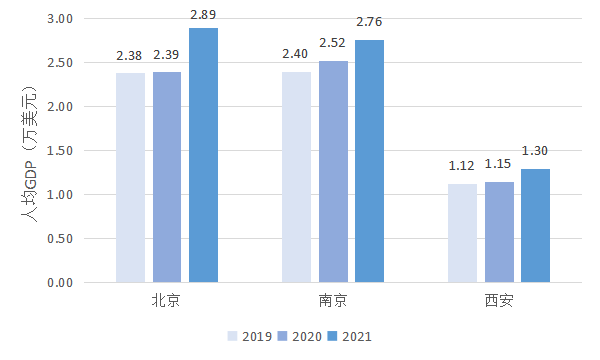
1. Beijing and Nanjing per capita GDP have exceeded 20,000 US dollars, and the per capita GDP of Xi'an is also over $ 10,000
Xi'an has a history of more than 3100 years and a history of more than 1,100 years. Beijing has more than 3,000 years of history and more than 860 years of history. It is the ancient capital of the Five Dynasties. Nanjing has the history of the city in nearly 2600 and the history of the capital of nearly 500 years. It is an ancient capital of the Six Dynasties. From the perspective of the per capita GDP level of the three places, Beijing and Nanjing have both $ 20,000 or more, and the levels of the two places are close. Both are domestic leading levels. In 2021, Beijing's per capita GDP exceeded $ 28,000 and Nanjing per capita GDP exceeded US $ 27,000. Compared with the comparison Xia Xi'an was slightly lower than Beijing and Nanjing. In 2021, the per capita GDP of Xi'an was $ 13,000.
△ Figure 2-12019-2021 Beijing, Nanjing, and Xi'an per capita GDP (based on 10,000 US dollars)
2. Sample men are slightly more men than women, and the gender ratio is close to Qipu's permanent population gender ratio
From the perspective of sample gender structure, women in all interviewees account for 48.97%, and men account for 51.03%.
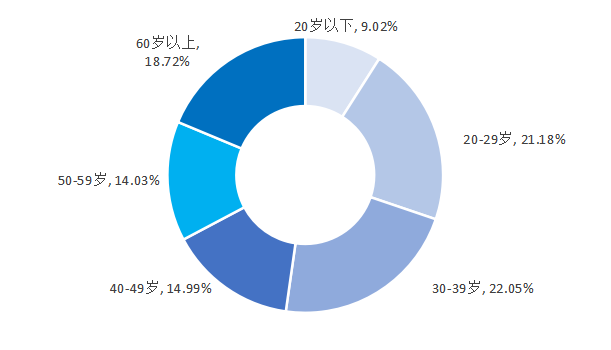
3. Balanced sample distribution of each age layer, the proportion is close to the seven -Pu age structure
The distribution of each age interval among the three places is small. Individuals under 20 years of age account for 9.02%, and individuals aged 20-129 account for 21.18%. In addition, the corresponding proportion of individuals 40-149, 50-19, and over 60 years old is 14.99%, 14.03%, and 18.72%, respectively.
△ Figure 2-2 The age distribution of interviewees
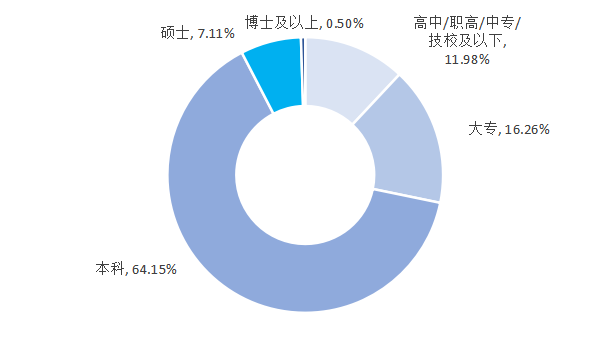
4. The majority of interviewees of undergraduate degree, the proportion is slightly higher than the level of the seven -Pu survey
The number of interviewees in the three places has the most interviewees, accounting for 64.15%, followed by 16.26%of the college degree, and a few interviewees are other academic qualifications. Generally speaking, the proportion of university cultural levels is slightly higher than the average level of resident population in the three places.
△ Figure 2-3 The cultural level structure
5. Professional types are mainly corporate units.
The number of enterprise units in the three places is the largest, accounting for 44.46%, and then in order, in turn, personnel, individual industrial and commercial households, retirees, and students.
△ Figure 2-4 In the career of the respondents

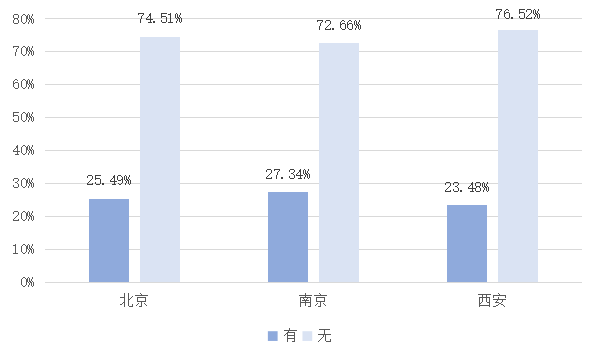
6. Nearly a quarter of the interviewees and the relatives and friends of the nearly five -fifths of the interviewees have professional knowledge experience
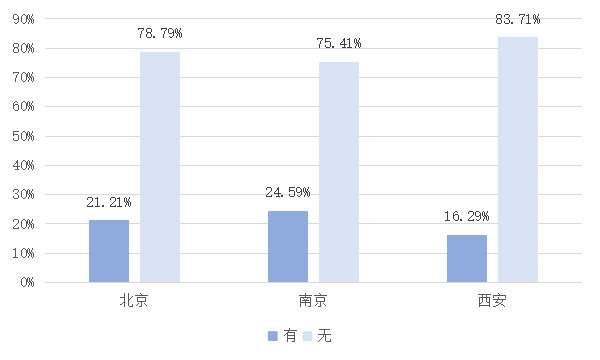
From the perspective of my own work and related professional learning experience in culture and art, archeology, museums, 25.49%of the respondents in Beijing have related experiences. Compared with Beijing, there are many people who are engaged in related work or related professional experiences such as art archeological museums such as the Arts and Archeology Museum, accounting for 27.34%; There are fewer people, accounting for 23.48%.
△ Figure 2-5 Beijing, Nanjing, and Xi'an interviewees have no museum-related work and learning background
From the perspective of the interviewee's relatives and friends engaged in cultural art, archeology, museum -related work and related professional learning experience, 21.21%of the relatives and friends of Beijing have experienced relevant experience. Compared with Beijing, relatives and friends of Nanjing interviewees have more people engaged in related work or related professional experiences such as art archeological museums, accounting for 24.59%; relatives and friends of Xi'an interviewees are engaged in related work or related professional experiences of art archeological museums in Xi'an. There are fewer people, accounting for 16.29%.
△ Figure 2-6 Beijing, Nanjing, and Xi'an respondents and friends have no museum-related work and learning background
7. The monthly income level of the interviewees is 5001-10,000 yuan
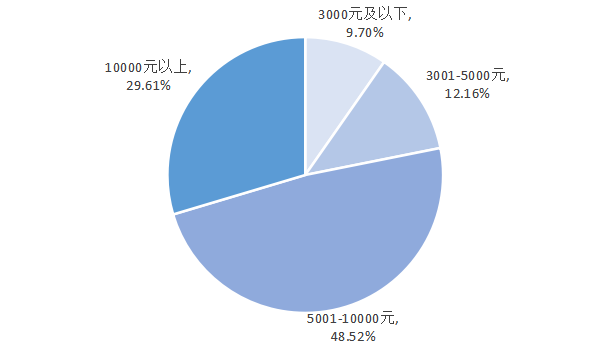
The monthly income level of respondents accounted for nearly 80%of the proportion of more than 5,000 yuan. The interviewee's medium -month income fell at the 5001-10,000 yuan intervals, accounting for 48.52%, followed by more than 10,000 yuan, accounting for 29.61%.
△ Figure 2-7 Interviewer's monthly income level
8. In the past year, the average daily online time is more than 3 hours.
Judging from the time of leisure time in the past year, 42.05%of the interviewees have an average daily spare time in 3-15 hours, followed by 1-13 hours, accounting for 30.75%. 18.86%of the interviewees have been on the Internet for 5-17 hours, and the remaining few interviewees also have different degrees of free online. Overall, it is more common to surf the Internet in time.
△ Figure 2-8 interviewee to go online for a long time

The characteristics

(1) Cognitive situation of "City of Museum"
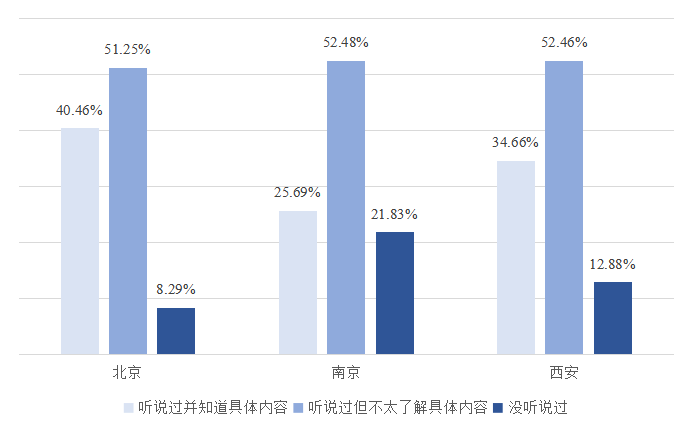
1. Most interviewees know the construction of "City of Museum"
From the perspective of the "Museum's City" construction cognition, there are 91.71%in Beijing, 87.12%of Xi'an, and 78.17%of Nanjing. It shows that the three places attach more importance to the publicity of the construction of the "city of the museum".
△ FIG
2. Compared with foreign museums, most interviewees believe
Compared with other foreign museums, Beijing interviewees have higher evaluation of the level and influence of the local museum. There are 95.50%in Beijing, 92.86%of Xi'an, and 86.40%of Nanjing in Nanjing. It can be seen that most respondents recognize the level of construction of urban museums. △ Figure 3-2 A respondents in the three places believe that the construction and influence of local museums
3. Museum practitioners' perception of the level of local museum construction is different from citizen samples
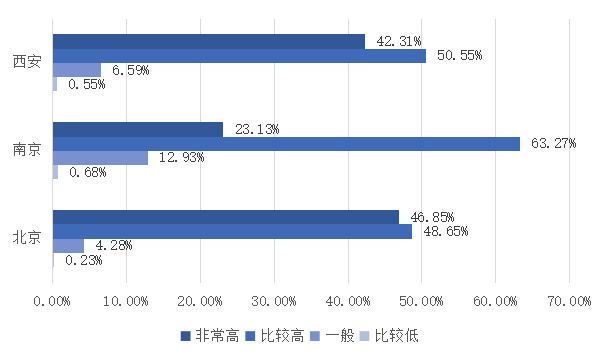
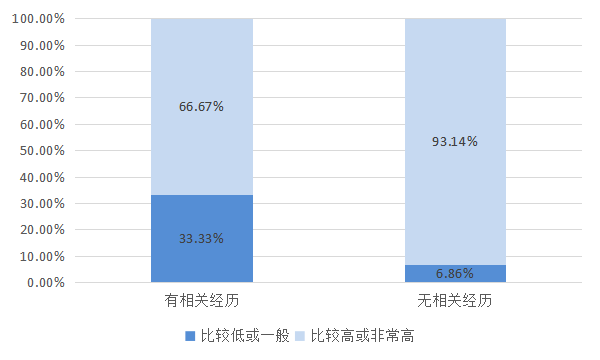
Different from the general respondents, the survey results of our 33 museum practitioners show that compared with foreign museums, it is believed that the level of local museums is relatively high and very high. The ratio is 93.14%.
△ Figure 3-3 Different professional background respondents believe that the influence of the local museum influence
(2) Museum's visit habits and factors
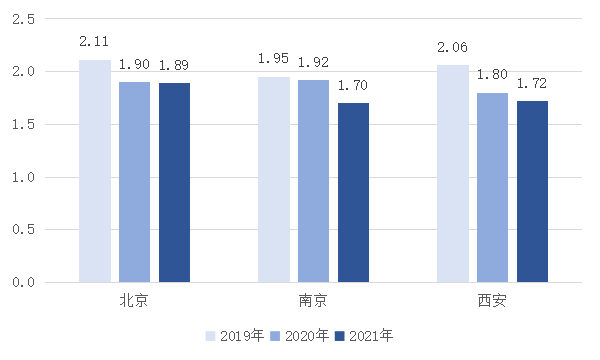
1. In the past three years, the offline visit to the museum has a significant impact on the epidemic, but the average consumption value has been on the rise.
Due to the impact of the epidemic prevention and control, the average frequency average value of the museums in the three places from 2019-2021 showed a downward trend.
△ Figure 3-42019-2021 Museum of Museums of the Three places changes frequently
On the other hand, interviewees have risen slightly. For Beijing interviewees, it was 190.34 yuan in 2019, and in 2020 and 2021 increased to 194.84 yuan and 209.66 yuan. In contrast, the consumption level in Nanjing's museums is relatively low, while the average visit consumption of Xi'an 2019 and 2021 is higher than the average level of Beijing.
△ Figure 3-5 2019-2021 Museum of Museum of the Three places changes offline consumption average
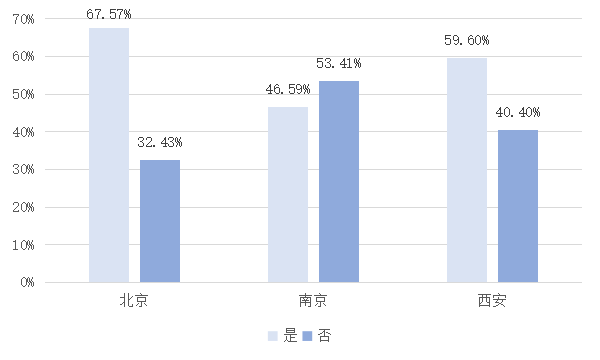
2. More than half of the interviewees take the museum as a must -have place for overseas tourism, and the proportion of Beijing interviewees is higher

When traveling abroad, 67.57%of respondents in Beijing will definitely visit the museum. Only 46.59%and 59.60%of the interviewees in Nanjing and Xi'an will visit the museum while traveling overseas. Visiting museums not only become an important part of tourism, but also reflects the increasing impact of the museum on the people.
△ Figure 3-6 Whether the museum is a must-have place
3. "Growing knowledge, cultivating aesthetics", "decompression and relaxation, leisure and entertainment", "finding information, academic research" is the most important three types of visits in offline visit
The main purpose of interviewees in the three places includes "growth knowledge, cultivating aesthetics", "decompression and relaxation, leisure and entertainment" and "finding information, academic research". Other reasons are "highlighting taste, social sharing", "children's aesthetic education, family needs" and "Internet celebrity punch card, obtaining talks".
△ Figure 3-7 Interviewee's offline visit purpose
4. Family travel and friends with friends are the most important types of offline visiting ways to travel

The most visited by the Museum in the three places is family travel, accounting for 46.42%, followed by friends who travel with friends, accounting for 34.72%. Once again, personal travel, accounting for 13.41%. It can be seen that visiting the museum has gradually become a leisure lifestyle that the people are willing to spend time, and the quality of life and cultural literacy of people in the subtle way.
△ Figure 3-8 Interviewer to visit and travel offline
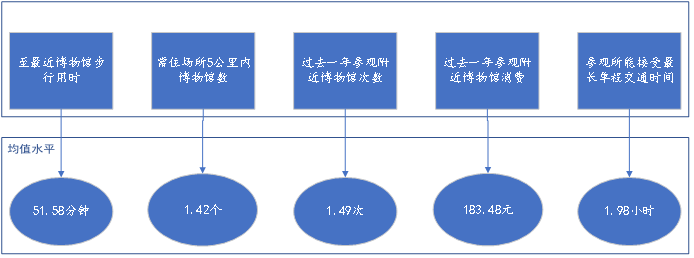
5. Most interviewees walk until the museum that is closest to the nearest residence is less than 60 minutes, and the number of museums within 5 kilometers of residential residences is 1–2

The average time of interviewees in the three places walking to the museum closest to the residential residence was 51.58 minutes, and the average number of museums within 5 kilometers of residential residences was 1.42. The consumption is 183.48 yuan, and the longest one -way traffic time that can be accepted by the local museum is 1.98 hours.
△ Figure 3-9 Interviewees in the three places always live in the distribution of visit to the nearby museum
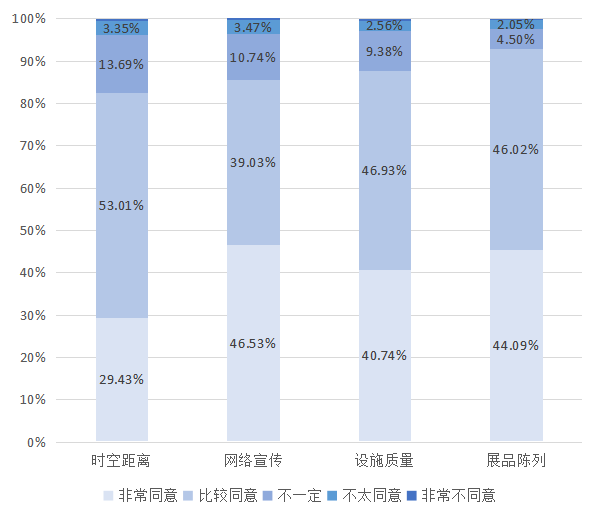
6. Time and space distance, museum facilities and exhibits quality, publicity and promotion factors are important factors affecting the visit of the museum
Among the interviewees of the three places, 29.43%of them agreed to "the time and distance from the museum will affect the visit to the museum". The proportion is 46.53%, and the proportion of interviewees that "museum facilities will affect the museum's visit" are very agreed to account for 40.74%. The proportion of interviewees accounted for 44.09%. In general, the time and space distance, museum facilities and exhibits have affected the decision of residents to visit the museum to varying degrees. Compared with the distance between time and space, the impact of museum facilities and exhibits is more prominent.
△ FIG
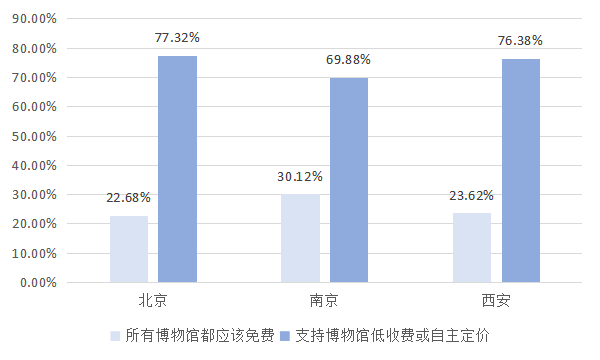
7. Residents who support the museum to maintain low charges or autonomous pricing models accounted for the majority
The visit environment of the museum is very important. Judging from the free view of the museum, most of the respondents support the museum to maintain low charges or independent pricing ticket models.
△ Figure 3-11 The interviewee's view of the museum free
(3) Online exhibition participation situation
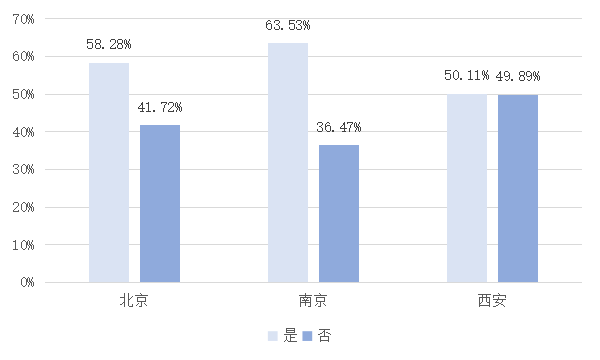
1. In the past year, most interviewees have participated in the online exhibition of museums above and above. From whether to participate in the museum online exhibition, over half of the interviewees have participated in the museum online exhibition. Among them It was 63.53%, followed by Beijing, 58.28%, and then Xi'an, 50.11%.
△ Figure 3-12 Whether the interviewees of the three places visited the online exhibition comparison
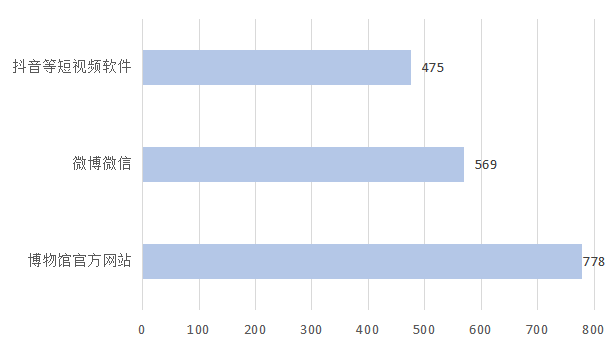
2. The official website of the museum is the most commonly used online exhibition platform for interviewees
From the perspective of online exhibition use platforms, interviewees use the most to visit online exhibitions from the official website of the museum, and use Weibo WeChat and other short video software such as WeChat to participate in the museum online exhibition.
△ Figure 3-13 Interviewee Online Exhibition Using Platform
3. Interviewees participating in online exhibitions are more satisfied with online exhibitions
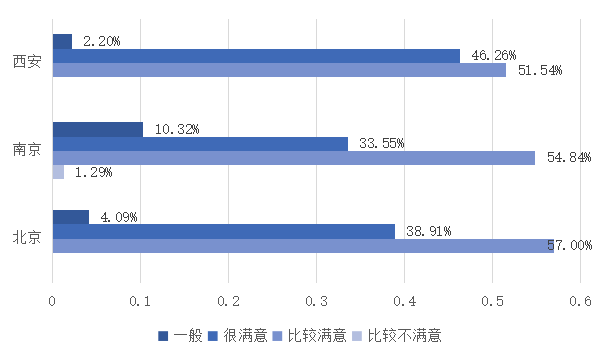
From the perspective of online exhibition satisfaction, Beijing interviewees have a higher level of satisfaction in online exhibitions than Nanjing, and they believe that online exhibitions are relatively satisfied and satisfied with 95.91%. Nanjing believes that online exhibitions are relatively satisfactory and satisfied 88.39%; only 4.09%of the respondents in Beijing felt that online exhibitions were generally exhibited, and 10.32%of respondents in Nanjing felt that online exhibitions were general, and 1.29%of the respondents felt dissatisfied.
△ Figure 3-14 Interviewer online exhibition satisfaction
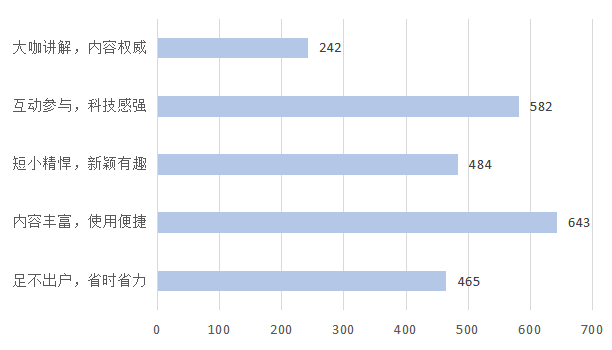
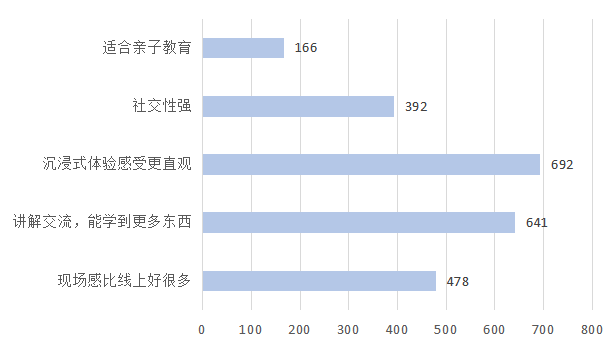
4. Online exhibitions and offline exhibitions have their own advantages. Online strength is convenient and technological, offline strength is immersion and interaction
Judging from the online exhibitions and offline exhibitions, the two exhibition modes have their own advantages. Based on the advantages of online exhibitions, the two main advantages selected by the respondents are "rich content, convenient use" and "interactive participation, strong sense of science and technology". In contrast, the two most obvious advantages of the offline exhibitions selected by the respondents are "more intuitive immersion experience experience" and "explanation and communication, and can learn more." The convenience and novelty of online exhibitions are also in sharp contrast to the sense of live and sociality of offline exhibitions.
(A) Online exhibition advantages
△ Figure 3-15 Interviewee believes that the advantages of online exhibitions and offline exhibitions
(b) Offline exhibition advantages
△ Figure 3-15 Interviewee believes that the advantages of online exhibitions and offline exhibitions
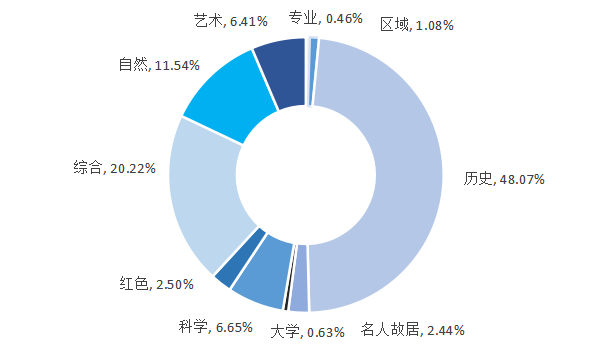
5. History museum is considered to be the most attractive museum category
Nearly half of the interviewees are the most attractive museum categories are historical museums, accounting for 48.07%; followed by comprehensive, natural, scientific, red, art, celebrities, professional residences, professional categories , Red and regional classes.
△ Figure 3-16 Interviewees believe that the most attractive museum category
4. Group differences between the interviewee museum visits
(1) age difference
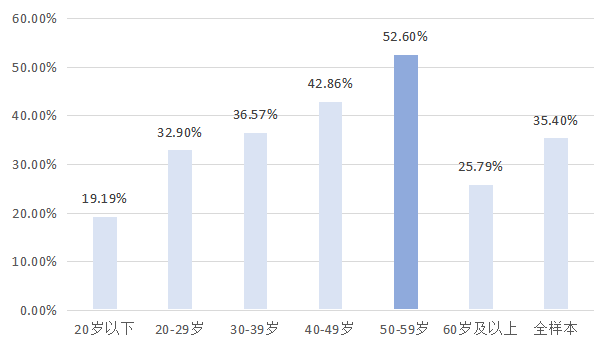
1.50–59 -year -old group is most concerned about the "Museum City" construction project

Looking at the cognition of the "Museum City" in the age, residents 50-159 years old are most concerned about the construction of the "Museum City". 52.60%of the intervals of this age have heard and knew the "Museum City". Construction of specific content, higher than 35.40%of the full sample.
△ Figure 4-1 The age difference of the construction cognition of the "City of Museum"
2. The attraction of the museum's attraction to residents aged 20-1 needs to be strengthened
The 20-29 -year -old interviewees have visited the museum frequency of 1.84 times, 1.66 times, and 1.62 times in the past three years. They are obviously less than the average level of the full sample, respectively, 2.11 times, 1.90 times, and 1.89 times, which reflect the museum pair of pairs of pairs The attractiveness of the 20-29 -year -old residents needs to be further strengthened.
△ Figure 4-2 Age of age differences of interviewees offline visits frequency
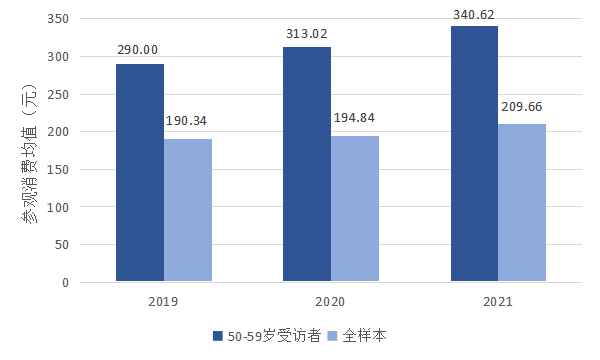
3.50–59 -year -old group is currently the main force of offline consumption of museums
The average museum of the 50–59 -year -old residents group is significantly higher than the average of other groups and full samples. Specifically, the average offline visits consumption in the past three years in the past three years in the past three years is 290.00 yuan , 313.02 yuan, 340.62 yuan, the net difference between the average consumption level of the full sample of the year is basically more than 100 yuan.

△ Figure 4-3 The age difference of the interviewees offline visits offline
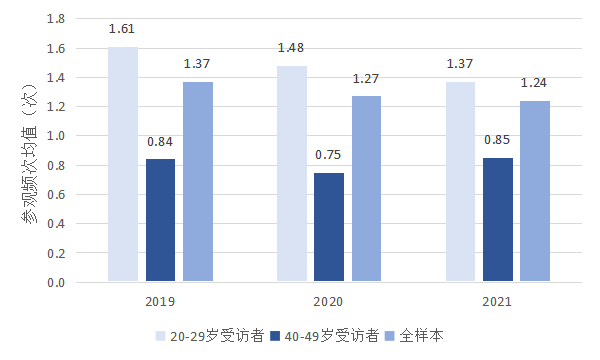
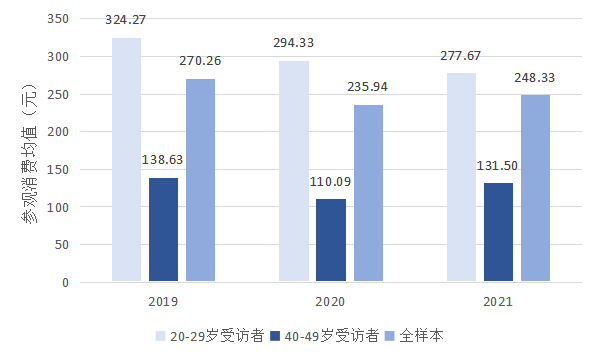
4.20-129 young people prefer private art museums and have a higher willingness to pay; while 40–49 -year -old groups have the lowest average level of visit to private art museums
At 20-29, young people prefer to visit the private art museum and are willing to pay for it. In contrast, the 40–49 -year -old group, the attractiveness of the private art museum is relatively limited, and the group's willingness to pay is relatively low. There is a large gap between the average visits and consumption levels from other groups and full sample average levels. Specifically, in the past three years, the aged 20-29 years old and 40–49 -year -old groups in the private art museum are nearly half of the offline visit. The average consumption level of the former is nearly 150 yuan higher than the latter.
(a) Age difference between the offline visit frequency of the private art museum
△ Figure 4-4 The age difference of the offline visit to the private art museum of the respondents
(b) The age difference of the private art museum to visit the consumption offline
△ Figure 4-4 The age difference of the offline visit to the private art museum of the respondents
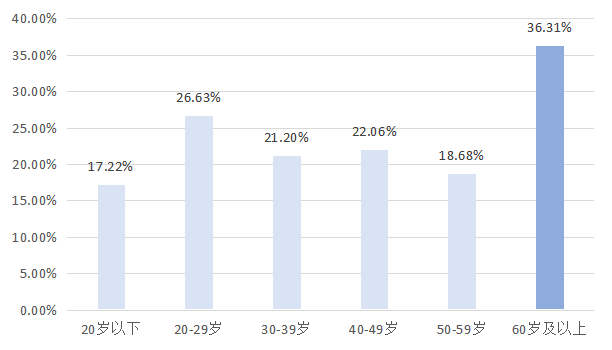
A group of groups over 60 years of age of free tickets for museum tickets is relatively large
A group of groups over the age of 60 is relatively large, accounting for 36.31%.
△ Figure 4-5 The age difference between the proportion of "all museums should be free" (2) income differences
1. Most respondents with different income levels support the museum to maintain a low charging mode
Each income level group should be free of free attitude towards museum tickets. The majority of groups that museums should be charged at low fees are consistent with the results of full sample descriptions. Most interviewees believe that the museum should maintain low charges or determine the charging standards according to their own conditions. Mechanism, enhance the function of hematopoietic function. In particular, the lowest proportion of interviewees in 3,000 yuan and below groups believes that "all museums should be free" are that most of these groups are non -income students under 20 years of age. It may have received the economic support of parents.
△ Figure 4-6 The interviewee believes that "all museums should be free" in income difference
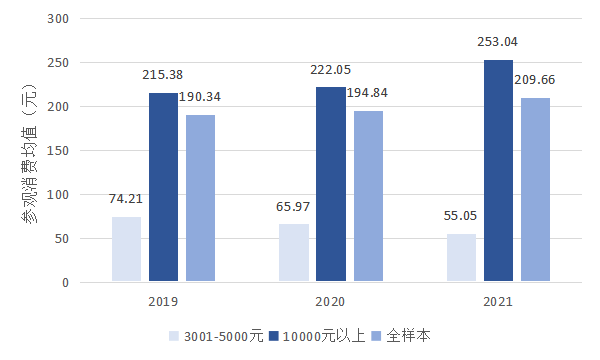
2. There is a relatively obvious gap between the frequency of visiting and high -income groups in the frequency of visiting and visiting consumption.
The income group represented by 3001–5000 yuan and the income group represented by more than 10,000 yuan have a relatively obvious gap in the average visits and contemporary visits. The reason for the selection of 3001–5000 yuan group represents low -income groups is that 3,000 yuan and below samples are mostly no income people under 20 years of age. The offline visit is not enough.
(A) Different income interviewees 2019-2021 offline visit frequency average comparison

△ Figure 4-7 The income difference between offline visits of respondents
(b) Different income interviewees 2019-2021 offline visit consumption average comparison
△ Figure 4-7 The income difference between offline visits of respondents

(3) Professional background differences
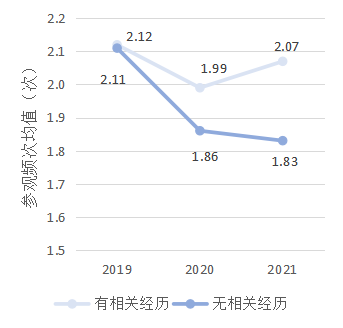
1. Interviewees with professional backgrounds are higher offline, but the level of consumption is lower
Compared with groups without relevant work or learning experience, the analogy of offline visit frequency of respondents with professional knowledge background will be higher, but the average offline consumption of this group will be lower. Museums and private art museums also appear in offline visit.
(A) The effect of professional knowledge background on offline visit frequency
△ Figure 4-8 Professional background differences in offline visiting situations
(b) The impact of professional knowledge background on offline visits consumption
△ Figure 4-8 Professional background differences in offline visiting situations
5. Museum with the most impressive impression
(1) Museum that Beijing residents are most impressed by

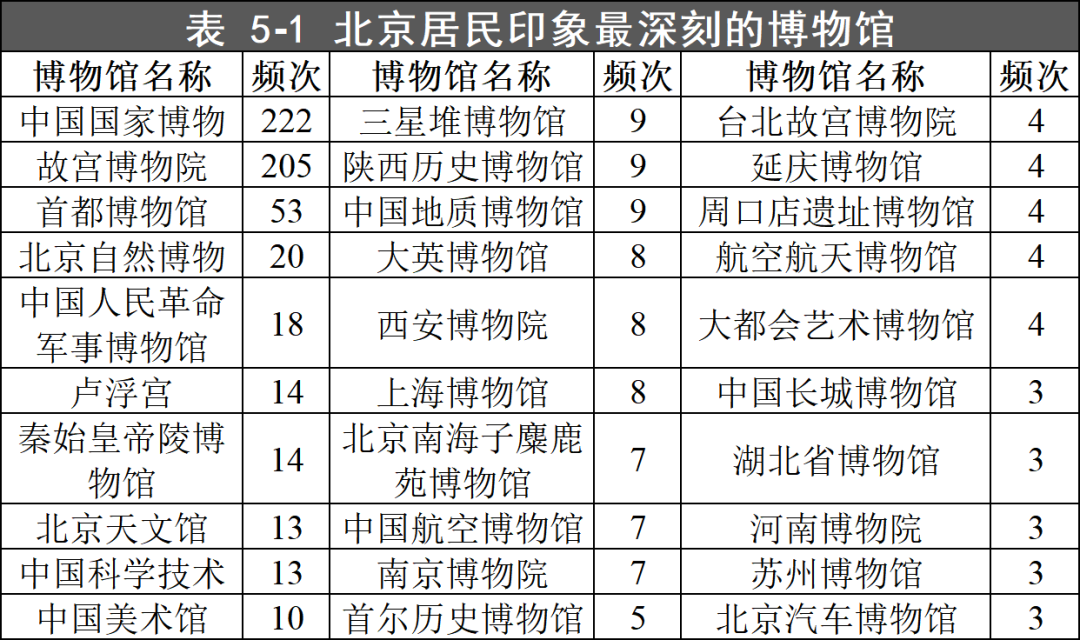
The most impressed museums in the Beijing region are the top three in the Museum of China, the National Museum of China, the Palace Museum and the Capital Museum. Most of the museums filled in by other interviewees are located in Beijing. The most impressive museums filled by more than ten interviewees include: Beijing Natural Museum, the Chinese People's Revolution Military Museum, Louvre, Emperor Qin Shi Mausoleum, Beijing Astronomical Museum, China Science and Technology Museum and China Art Museum.
△ Figure 5-1 Beijing interviewees impressed the deepest museum cloud map

(2) Museums that are most impressed by Nanjing and Xi'an residents
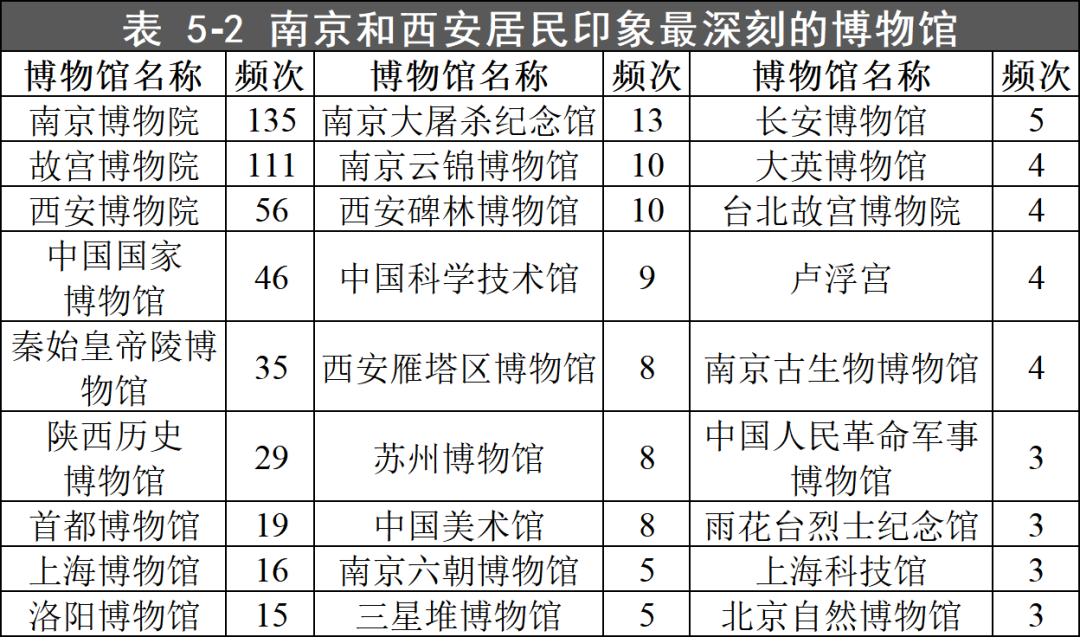
Interviers interviewees in Nanjing and Xi'an are roughly the same as Beijing's most impressive museums as Beijing. The most impressed museums among the interviewees are Nanjing Museum, the Palace Museum and the Xi'an Museum. Except for these three museums, Most of the museums filled in more than 10 interviewees are located in Beijing, Nanjing and Xi'an.
6. Suggestions for the construction of "City of Museum"

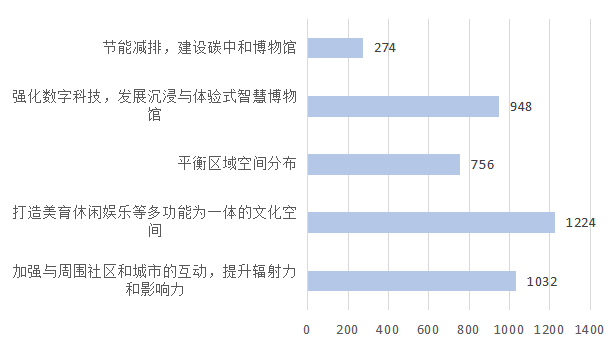
1. "Cultural space such as creating aesthetic education and leisure entertainment" and "strengthening interaction with the surrounding communities and cities, enhancing radiation and influence" is the two most urgent need to improve the construction of the "city of the museum". Aspect
From the problem that the museum needs to be promoted, the interviewees who have experienced the experience of museums are most concerned about the construction content of the two aspects of the two aspects of the "Cultural Space of Create Aesthetic Education, Leisure and Entertainment" and "Strengthening interaction with the surrounding communities and cities. Improve radiation and influence. " Some interviewees have paid attention to regional distribution, energy conservation emission reduction, digital technology and other content.
△ Figure 6-1 The interviewees believe that the museum needs to be improved

2. Museum's affinity, sense of science and technology, cultural, cultural, innovative, influence, leisure and other attributes are all very concerned about the construction field of Beijing interviewees.
Through frequent analysis of open -minded questions, we summarized the advice of the interviewees on the construction of the "city of the museum". More interviewees reflect the museum's parental nature. If you hope that the museum is more free or reduce ticket charges, or launch more visiting activities. Secondly, many respondents made suggestions on the museum's sense of technology. If you hope that the construction of the museum in the future can be more digitized and intelligent, and more advanced technologies will be used to optimize the visiting experience of tourists. Suggestions for cultural sense are mainly from the cultural significance and historical significance of the exhibition. I hope more reflects my country's cultural connotation and cultural characteristics. There are also interviewees who want to be more innovative in the future museum, mainly manifested as the needs of exhibits update and optimization. In addition, the respondents made suggestions on increasing publicity and enhancing leisure and entertainment functions.
综合三地调查统计数据和受访者建议词频分析,结合“博物馆如何影响市民生活”这一主题,我们对“博物馆之城”建设提出如下建议:第一,提高博物馆的亲民性,注重博物馆与Interaction between cities and communities. From the scarcity and value of "things" in history, the museum has shifted to paying attention to the feelings and needs of "people" in the present life, highlighting the people's nature reflecting the improvement of the overall values of the museum. The museum needs to provide convenient channels and equal opportunities for public access and enjoy service, and establish an equal and harmonious interactive relationship.
Second, increase the novelty and relaxation of the museum, pay attention to the integration of leisure and aesthetic education, enhance the attractiveness to the public, and further enhance the participation of public culture. Museums must fully reflect the value of cultural relics and art, so that the exhibitors can get a better sensory experience, spiritual gain and value influence. The museum should be a "museum of the wall", and the museum exhibition exhibitions and other functions have entered the commercial district, community, airports, stations and other urban public spaces. In addition to academic research and knowledge, you need to do a better shortcomings for leisure functions.
Third, integrate science and technology and intelligent digital into museum construction, and improve the modern expression of traditional culture. Enhance the mobilization of digital resources between museums through scientific and technological means to attract young people into the museum. Inherit the supply of Chinese cultural heritage, develop digital collections, art derivatives, and innovative cultural products and services.
Fourth, the publicity methods and forms of innovation museums improve the influence of museums and activities. Data from professional background respondents show that the group mentioned more about the publicity of the museum in the openness of openness and enhance the influence of the museum. At the same time, all sample data also shows that well -known cultural relics, variety shows, and Internet celebrity elements will directly affect the decision of some residents to visit the museum. Through a variety of promotion methods, more vibrant and influential activities can be held, which can make the museum better integrate into the lives of citizens.



- END -
Non -heritage | non -heritage space allows non -heritage to be grounded and popular
Northern Shaanxi folk songs, luminous cup sculptures, Anshun Drama, Tibetan Thangk...
Development disability secrets revealed
A few days ago, data held by the Ministry of Education showed that my country's illiterate rate had fallen to 2.67 %. Literacy reading is so popular that it will cause people to have an illusion. It i...