Digital password of the Forbidden City
Author:China Well -off Time:2022.08.18
China Well -off Network Exclusive Specialty
Text | "Well -off" · China Well -off reporter Su Feng
The digital work is to make the human cultural heritage of the Forbidden City permanently preserved.

On June 21, 2022, the National Palace Museum opened a new page. The Forbidden City Cloud Class APP released the digital badge "Ruolu Youxia". Picture/Forbidden City Cloud Class app
Speaking of the Forbidden City, you may first think of the Forbidden City of Beijing or the Shenyang Forbidden City. In fact, from July this year, our Wenbo Pickled Land added another place -the Forbidden City of Hong Kong.
On the occasion of the 25th anniversary of the return of Hong Kong, the Hong Kong Palace Museum, located at No. 8, West Kowloon Cultural District Museum Road, Yinwang District, Hong Kong Special Administrative Region of the People's Republic of China, was completed and officially opened to the public on July 2.
It is worth noting that, in addition to 914 precious cultural relics from the Palace Museum, in the Hong Kong Palace Museum, the Hong Kong Forbidden City will also enrich the overall display effect through digital and multimedia interaction.
According to Ren Wanping, deputy dean of the Palace Museum, after opening the museum of the Cultural Museum of the Palace Museum in Hong Kong, the Palace Museum will successively provide 7 virtual reality programs such as "The Palace of the Forbidden City · Tianzi" and "Han Xizai Night Banquet". The audience is more intuitively showing the ancient buildings of the Palace Museum's cultural heritage and cultural relics.
At that time, wearing VR equipment, tourists can lie on the sofa, "cross" the historical space and space of the Forbidden City, follow the changes in multimedia images into the dream of Emperor Qianlong, explore the Forbidden City, and feel the emperor's lifestyle in the realm.
The launch of the Hong Kong Palace Museum has witnessed a new direction of digital exhibitions and digital cultural and creative digital exhibitions such as digitalization, multimedia, and big data.
Digital exploration of Beijing Forbidden City
The Beijing Forbidden City, which was built in 1420, is the world's largest and most complete ancient wooden palace building complex. It is also the museum with the most Chinese cultural relics and the most visited audience in the world. There are more than 1.86 million cultural relics.
As early as 1998, the Palace Museum began a digital exploration. In that year, the Palace Museum was established to establish a data information center to start the establishment of a cultural relic collection management system.
Starting at the end of the 20th century, the Palace Museum began digital ideas and construction.
In 2001, the Palace Museum's website was opened and became the starting point of the construction of digital forbidden City.
In 2003, the "Institute of Digital Application of the Forbidden City Cultural Assets" was established to strengthen the basic functions of the protection, research and display of the museum protection, research and display of digital technology.
In 2016 and 2017, the Forbidden City held the "Taihe World Ancient Civilization Protection" forum for two consecutive years to explore topics such as human cultural heritage protection and digital cultural relics. According to the forum, at that time, the digital achievements of the Forbidden City had been spread to more than 200 countries and regions.
In 2020, the "Digital Forbidden City" applet was released, and the Forbidden City "moved into" the online.
At the China International Services Trade Fair in 2021, the Forbidden City first appeared in the exhibition platform in a digital form to the world.
In 2022, the "Palace Museum Cloud Class" APP of the China Cultural Expo Deep Cloud Learning Platform of the Palace Museum was launched, relying on the collections of the Palace Museum, and was jointly created by the cultural relics research experts of the Palace Museum. Audiovisual courses, professional and systematic curriculum content and systems, through digital technology linking traditional cultural education, enabling the majority of audiences to get close to the excellent traditional Chinese culture of China.
On June 21, 2022, the Digital Palace Museum opened a new page. The Palace Cloud Class APP released the digital badge "Ruolu Youxia" and adopted the form of free acquisition of knowledge to be released for sale. Through learning excellent traditional culture and accumulating cultural points, the public can exchange digital badges, and use digital tools to achieve the sharing of the whole people.
"Ruolu Youxia", take the boutique landscape painting hidden by the Palace Museum -some elements of "100,000 Maps" by Ren Xiong in the Qing Dynasty, some elements of Wanlian Qinglian, the "Lotus Leaf of the Tianlian Leaf of the Southern Song Dynasty "The design tone is the main design, and a new design interpretation was performed -in the form of dynamic form, the" Summer Solstice God "Ruolu came from the midsummer, and the titles came from the titles. Scenery, deconstructing classic aesthetic elements, and bringing traditional solar terms into contemporary digital life.
It is understood that the design of the Digital Badge of the Forbidden City Cloud Class Emerald comes from the traditional "twenty -four solar terms" in China. A total of 16 works in this series of digital collections include a solar term selected from the "Dry Branch December Order", which forms 12 "picture digital badges works" and 4 "special model animations with two -point" solar terms Video work ". The Forbidden City Cloud Class APP will also launch 15 other digital works one after another.
At the same time, the Palace Museum also gives cultural value to the form of the acquisition of the digital badge -the younger generation has accumulated cultural points to redeem the digital badge by learning excellent traditional culture, so as to innovate a new digital experience in the cultural relics of the museum to inspire more younger younger youths One generation of cultural learning is enthusiastic.
Hidden by thousands of years, pass on Xi Yun on the clouds
This year, the Palace Museum's online education project launch conference with the theme of "Thousands of Hidden, Passing on the Clouds" was held in the Palace Museum of Palace Museum. The "Online Education Resources Platform of the Palace Museum" was released during the event.
The "Online Education Resources Platform of the Palace Museum" combined with double -reduction policy needs, and gathered experts and scholars from the Palace Museum, colleges and universities, and scientific research institutes, and created traditional cultural education courses for systematic and division sections. All courses will enter the school in the form of public welfare and inclusive to serve elementary and middle school students in the country to help young people better inherit and promote the excellent traditional Chinese culture. Wang Xudong, president of the Palace Museum, said that the Forbidden City was the wisdom of the ancient Chinese labor people, the bearer of the 5,000 -year -old civilization of China, and a gathering place for the excellent traditional culture of China. In recent years, the Palace Museum has implemented the cultural relics work policy of "protection, rescue first, reasonable utilization, and strengthening management", and truly protects and inherits the outstanding traditional culture of China carried by the Palace Museum. The online education platform of the Forbidden City school will bring more opportunities for young people to understand and learn Chinese excellent traditional culture, and cultivate their love for Chinese excellent traditional culture.
Yu Zhuang, deputy director of the Digital and Information Department of the Palace Museum, said: "Digitalization of the Forbidden City has gone through more than 20 years. The most fundamental purpose is to make such a large amount of such large and precious human cultural heritage permanent preservation and sustainable inheritance, utilization, utilization . In recent years, the damage of cultural heritage around the world has occurred from time to time. We have a deep responsibility, and the pace of digitalization of the Forbidden City should also become faster and faster. "
At present, the Palace Museum has completed the basic digital work of more than 700,000 cultural relics, and is promoting and accelerating basic digitalization in an orderly number of 70,000 to 80,000 pieces each year. "We strive to allow all physical relics to have our own digital ID as soon as possible." Yu Zhuang said.
In the future, the Forbidden City will use knowledge maps and other technologies, integrate cultural relics information, and support intelligent search. "How to make people can find the cultural content we want more directly and conveniently, it is the topic we need to study." Yu Fai's example said that the civil security department in the Forbidden City has dismantled and repaired a lifting tower clock during the Qianlong period of the Qing Dynasty. This is The entire process of disassembly repair and repair of Cantonese clocks with a height of 108 cm, 44 cm wide, and 38 cm thick and almost every part and almost every part are recorded with ultra -high -definition 3D data collection technology. "If the measurement accuracy is high enough, we can even use 3D printing and other technologies in the future to truly restore this complex and precise watch cultural relic."
The path of digitalization of the Forbidden City reflects the concept of building "digital twins", and digital media and online platforms have also spread Chinese culture further.
The new coronary pneumonia epidemic accelerates the digital process of the museum industry. "Cultural exchanges that cannot be promoted offline can be realized in the cloud." Yu Zhuang said that in the future, museum cultural relics from all over the world may be able to gather and interact in the clouds, which can quickly form international exhibitions, and carry out cultural exchanges through time and space. Essence
Du Haijiang, Secretary of the Party Committee and Deputy Dean of the Palace Museum, said: "The Forbidden City has made digitalization of more than 700,000 pieces of cultural relics. To better spread excellent traditional culture. In recent years, the Forbidden City has stimulated the vitality of the Forbidden City through live broadcasting, digitalization of cultural relics, scientific and technological exhibitions, and short videos of the Forbidden City, expanded the scope of the audience, and made cultural communication more adaptable to modern life. "
Recently, the "Opinions on Promoting the Implementation of the National Cultural Digitalization Strategy" issued by the General Office of the Central Committee of the Communist Party of China and the General Office of the State Council put forward eight key tasks, including the development of new digital cultural consumption scenes, vigorously develop online and offline integration, online and online. New digital cultural experience.
Driven by the continuous promotion of relevant policies, the new technologies, new methods, and new formats of cultural relics are constantly emerging, and the digital exploration of the Forbidden City will continue.
("Well -off" · China Well -off Exclusive Draft)
This article was published in "Well -off" in early August 2022
- END -
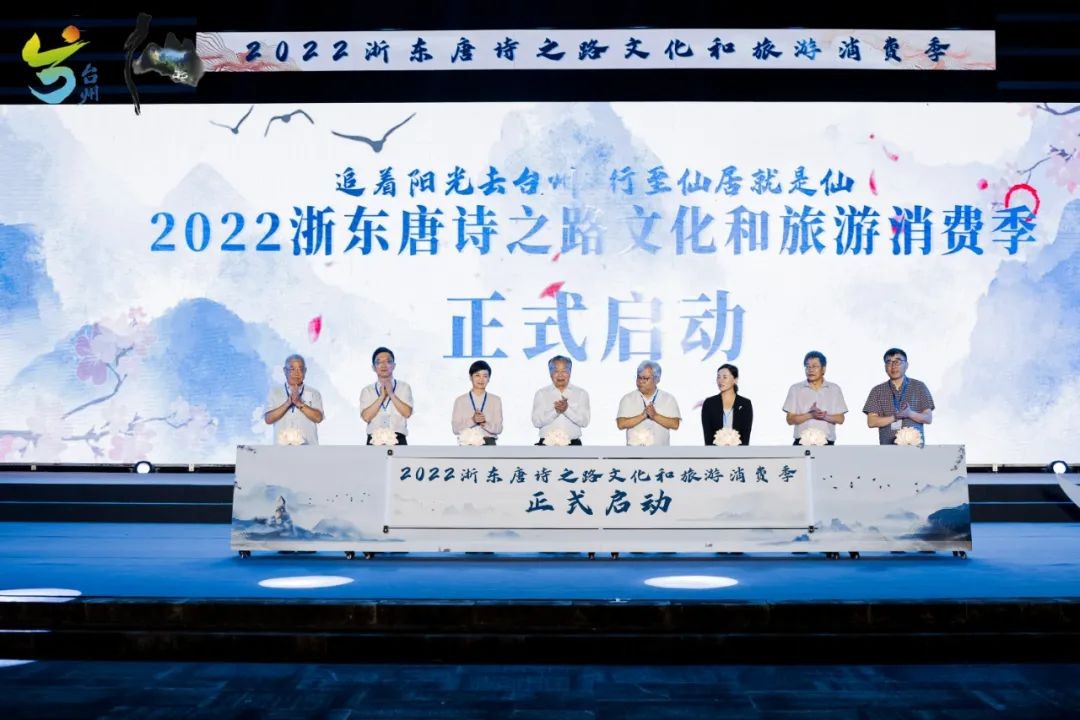
It is immortal to Xianju!2022 The Cultural and Tourism Consumption Season of the Tang Dynasty Poetry Road in the East of Zhejiang
Poetry jumps in the south of the river, and the landscapes. On the east of Zhejian...
Twenty -four solar terms in the American Masterpiece · Artist -Xiaoshu

Xiamu 文Paper ink 176 × 99cm Ming China Art Museum CollectionMagotos of the Qing ...