How to develop your brain and become a school hegemony
Author:Cool brain Time:2022.08.27


Picture source movie "Survival of the Wild"
The following is the full -text audio of reading Miss Sister
BGM: Song of Cat -Master Luo
Author | david handel
Translation | Zheng Yan
Grade for review | Cool brain main creator Xiaocao
Reading | Hu En
Artist | Soy Milk
Edit | Tinda
From kindergarten to high school, I am a middle school student, but when I arrived at the university, I graduated as the first medical school. Below is my secret.
Carol Dweck's studies have shown that you can get much more achievements than you think. But the success of school, especially university, is a complex task. Most people do not realize their potential as a student, and I have found a series of strategies and methods that can develop the potential of the brain that each we have.
Do you think that a middle school student learns, and then with a certain determination and perseverance, he or she can become a good student? Ha, this is my story.
On the way to my success, based on the knowledge of cognitive psychology, I discovered some effective learning methods that changed my life. Let me first tell you my results, and then explain how I am me today.
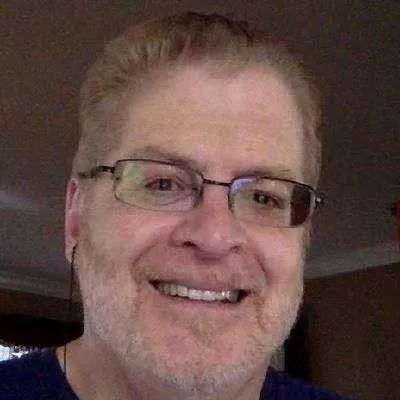
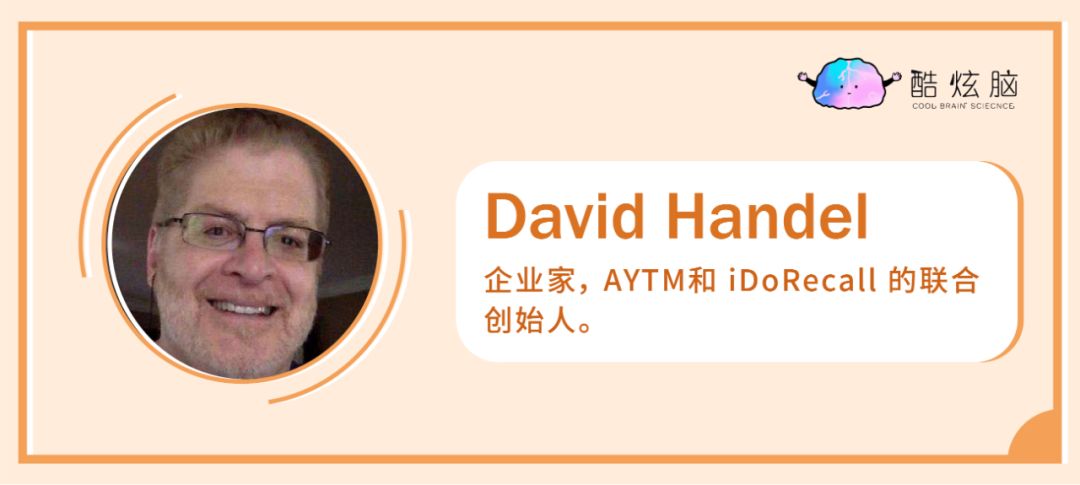
Founders of David Handel Aytm and Idorecall | Idorecall
1. My story
I am a 66 -year -old retired doctor. I have worked in the radiology department for 30 years and retired from the medical industry in 2014. In addition, I am also an entrepreneur, a co -founder of AYTM (looking for your target market) and IDORECALL (a software that helps people improve memory and learning ability).
In 1970, I graduated from high school and ranked among the top 50%in the class. From the kindergarten to the third year of high school, I have worked hard. I received a lot of extracurricular counseling in elementary school. I did not have a learning obstacle, the ability was higher than the average level, and I scored high in standard testing. But I have never been a good student, even if I have always wanted to do better.
After graduating from high school, I studied in college for a year. But I was not interested in learning, and finally dropped out of school with C+. I walked around some interesting life detours. Two years later, I returned to college. When I returned to school, I discovered some skills to help me change from learning slag to Xueba.
In the next two and a half years, I completed a course of about three and a half years. In my undergraduate career, I got 11 A+, and the remaining courses were A. A+was obtained in the courses where I have a perfect score for each test, because I have too many performances than other students who have obtained A, so the professor gave me higher grades than other students who obtained A. There are never such a precedent.
After obtaining a degree, I was admitted to the medical school. In four years, I am among the top exams. Then, I conducted internship training at the Department of Radiology at Duke University and was allowed to skip clinical internships for a year. This saves one year. In the last year of Duke, I was appointed as a general resident.
After I returned to college, where did my learning method different? How to explain how I changed from a scum to a school hegemon? For so many years, I have been reflecting on this problem.
I want to teach you the same way, those methods that make me change from a middle school to the best student I know. These methods are very instructive, because I am not the smartest person you have ever seen, and because the learning methods I use are supported by evidence -based cognitive psychology principles.
Unfortunately, although there are many empirical studies that reveal the methods that can be successful and not successful, few students (or teachers) will learn "how to learn", and they will not use the best way during learning.
pixabay
2. Treat time management as a competitive advantage
Time management skills are the same as property, but most students do not master it well. The school is divided into a smaller time unit: the time of the class, the time before the next exam, or the deadline for submitting the course thesis, two semesters, three semesters, one school year, and so on. If you look back at a period of study, such as a semester, you will find that you can allocate to a subject or complete your job.
In this limited time, you can get huge returns through investment in high -efficiency and useful activities. Efficient activities are activities that can learn the most at the same time and energy. Useful activities are those activities that can produce "true learning" and "lasting learning".
The goal of each semester is "real learning." If you can maximize your learning effect, it is natural to get good results. But "real learning" means that at the end of the semester, you have gained lasting knowledge, and these knowledge can be the basis for your future learning, and they will make you a talent.
Your long -term goal should be a deep, wide and long -lasting knowledge foundation. These are creative hotbeds and will completely transform you in your life. Therefore, if your goal is only a series of A in the transcript, and satisfied with the knowledge you learned after the final exam, then you do not catch the focus of higher education. And if you want more, then let's introduce some seemingly anti -intuitive but very useful time management skills. pixabay
3. Don’t take a lesson that is not necessary
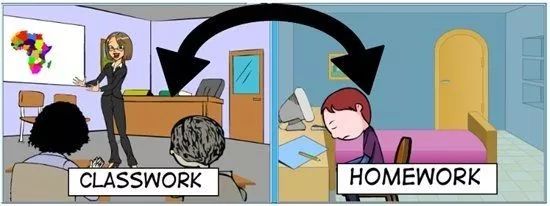
There are many professors in the course requesting the attendance rate. This is either incorporated into your performance assessment, or as a means to force you to study the course content. However, class is very inefficient. In addition to spending in the classroom, you have to take out the time on the road, even if you live in the school. The time spent in the classroom is not controlled by you, and the professor controls the speed of knowledge transmission. Don't you think of playing courses 1.2 or higher?
After class, you leave your notes away from the classroom. But at this time you haven't completed most of your studies. If you don't do anything except class and notes, do you think you can take A? Can you remember the content of the course information after one year at the end of the period? For most students, not.
However, I have a bad secret. Even if I graduated from the medical school with the first place, I actually tilted most of the courses in the medical school. Most of the courses can be carried out in the classrooms of about 200 students. The professor does not require the attendance rate or name, and the attendance rate will not be considered in your final score.
In fact, there is a notebook service in the students. Each course has a designated notebook student, and they will get compensation. These students' notes, including the professor's instructions written on the blackboard. They will also record the entire lesson. Their record is 99%of the curriculum replica, including illustrations.
Twice a week, I will take an hour to go to school for a few days of curriculum records. Later, most of my classmates began to learn not to use the curriculum of services like me, although they would still sit in the classroom to remember their own notes. I am convinced that most of them will tell you that in order to learn better, they need to class and take notes.
I got almost all the lessons, but I took the first place in all the exams. In order to reach this step, the first point is to manage my time extremely efficiently. Through classes, I can save six to eight hours a day. Compared with my classmates sitting in the classroom all day, I use these times much better.
You may not have the same method now, but if you have a chance, you should consider it. If your professor will share his or her curriculum video, don't go to class unless it is forced.
Of course, many of you may be a long -range learner, so course videos may be routine for you. If you are lucky enough to be in the Flipped classroom mode, then you can learn from the class outside the classroom. If you have course videos but no curriculum notes, then watch the video at least more than 1 times more speed. If the video is also accompanied by text versions, you can even read only text records without watching the video.
Flipped Classroom Mode | Picture Source Network
4. If you can, read it only once
Repeatedly read your curriculum notes, lectures, chapters in textbooks, and other learning materials are one of the most popular and standard learning methods. Students also like to focus on, or write on the side and read these entries repeatedly. We let ourselves believe that repeated reading can strengthen memory.
However, although repeated reading can indeed strengthen memory, its role is also subtle, and its output investment ratio is very low. Repeated reading is not a useful learning strategy. On the contrary, it has poor effect and low efficiency. The same is true of the focus. So, what should you do if you choose not to read repeatedly?
First of all, the most important thing is to replace repeated reading by extracting exercises -I will explain this in detail later. Secondly, obtain other learning materials from other professors, such as books, journal documents and curriculum videos. To expand your knowledge by learning the perspective of different experts, your professor and your designated textbook are not the only source of the knowledge of this subject.
When I was still in the medical school, I used the time when I was empty and only read the materials of the materials to read the other textbooks of the subject. This method makes my reading more larger than my classmates. I also assimilated these knowledge into my thinking mode through a useful skill -reflection.
I ask myself why different teachers or authors will have different interpretations of the same concepts, and how they understand these concepts differently. Sometimes their explanations conflict with each other, and I have to find the truth through further retrieval. By constantly reflecting on these issues, my understanding of knowledge is deeper.
Source network

5. Use small cards, extraction exercises, and repeated interval to remember what you have learned
Extracting exercises are the most powerful weapons that learners can have. The extraction exercise is a bit like bringing your memory to the gym to strengthen it so that you can recall a certain concept or fact in the future. Don't you want to have this superpowers? Extracting exercises are the best tools you can use to build a long -term memory that you want to remember. Let me explain what the extraction exercises are. Ideally, when you solve a problem and can independently extract its answer in your mind, extraction exercises can play the greatest role. This openness question is more challenging than the choice question or right or wrong -after all, the choice question or right or wrong questions cannot identify whether you really understand the material or just look at the answer.
If you are familiar, you can choose it when you see the answer, but you can't tell the answer without prompting or assisting. Answer openness is one of the "necessary problems" that make students feel bad but actually have good benefits.
Humans are actually very sensitive to their ignorance. We always use a wrong cognition to fool ourselves. This is why we always see the deviation like Dak effect. Therefore, the difficulty of extracting exercises is to obtain correct feedback to ensure that we do not mistakenly think that we know a lot.
This is the time for the small card. When you turn them over, you see the correct answer. For most people, this is enough to face their level.
pixabay
Another advantage of a small card is that we can do self -test at any time without the help of any learning group or friends. When I was in a medical school, I made a small card for everything I wanted to remember. The card should be very small, and only contains one fact or concept. When you do extraction exercises, focus your focus on that small piece of knowledge, just like you are concentrated in a certain group or a muscle when you do specific strength training in the gym.

Repeated interval is the second powerful weapon used to establish a solid long -term memory. Repeated intervals are dead memories, or duck -type learning. We all know what to do with death, and many students also believe that this is an effective way -to stay up late or study in a few days before the exam, you can remember most of the exam content.
Duck -filling learning | Google
Although it seems useful, it seems useful when you remember what you learned a long time ago, it is useless. If your only goal is to take A on the transcript, then the dead back of death seems to be a good way. But who would want a test all the exams but couldn't remember any doctor who learned in the classroom? On the other hand, compared with duck -filled learning, repeated intervals are proven to be a good way to build a solid long -term memory.
When you combine the intervals and small cards, or with other forms of extraction exercises, you are actually repeating extraction exercises. Imagine that you have 1,000 small cards. Will you pass every every morning? This is not an effective or sustainable method of memory.
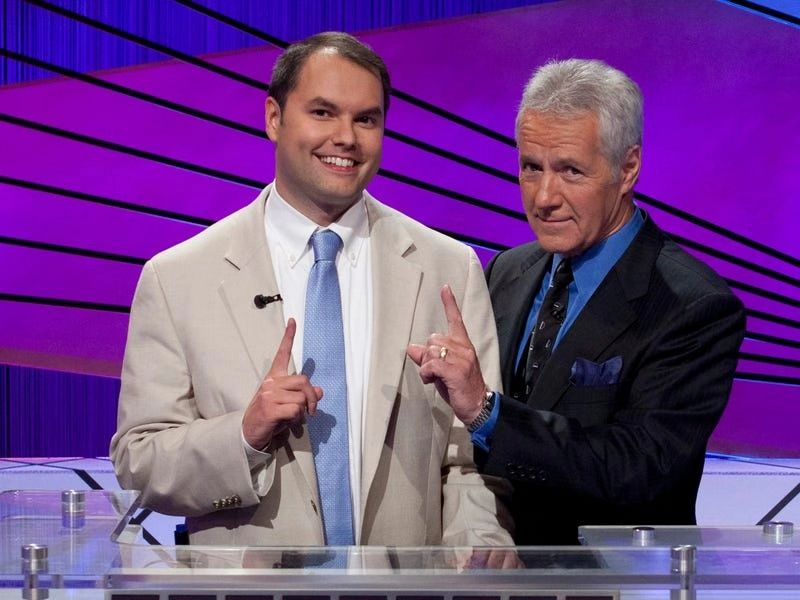
The best learning strategy is to learn a certain number of small cards every day. Roger Craig, the champion of Jeopardy, the knowledge competition, holds 220,000 cards that record the questions and answers in previous programs. Obviously, he can't carry each card every day, or even three months, it is impossible to carry it all over. Therefore, he used the card interval repeated software Anki. Similar to ANKI, I also have my own software IDORCall, which automatically provides your extraction exercises for the best time interval.
Roger Craig (left) winning the championship in Jeopardy | Carol Kaelson
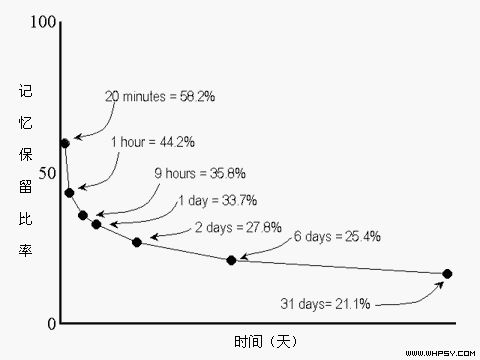
There are many obvious advantages. First, efficient. It makes it possible to store a large amount of cards. Second, the interval is repeatedly used for forgetting curves. In 1880, Hermann Ebbinghaus discovered the rules of forgotten. At that time, how long did he test the meaningless syllable he had recited on himself. He found that he would quickly forget the things under his back within a few minutes, hours, and days after reciting the syllable. Therefore, he concluded that forgetting is a natural law like exponential decay.
Studies have proved that using repeated extraction exercises, you can tame the trend of natural forgetting, and establish a stable long -term memory of facts and concepts. At the same time, it is most effective to extract exercises when you are going to forget a knowledge point.
This is another "necessary problem". Taking this imagination as a spiritual training is just like sports training. Within tolerable, the more difficult it is, the better. For example, if you go to the gym and try to raise two pounds, whether this weight is close to your limit will lead to completely different results.
So, how can a software algorithm know when to review you a card? How can it know when you are about to forget a certain knowledge point? Of course it doesn't know. But by observing a large number of people's forgotten rate, software can accumulate sufficient experience knowledge to judge.
In the most perfect circumstances, you should just review this card when you forget about a certain knowledge point. Such review is the most effective, and this time interval is the most efficient. Practice has proved that if you use it properly, even if you have thousands of cards, you only need to review a card with a card of less than 0.5%per day. When I was a student at the medical school in 1970, there was no electronic card or an automatic interval repeating software. That was the beginning of personal computing. My card is a 3 × 5 -inch paper card, and my interval algorithm is "all cards every five days", starting from the day I made these cards.
This system is almost useful as magic. Although it is not the most effective nor the most efficient, it is really easy to use. I almost became the person with the most study time in the class. If there was nothing else, I would stay at home all day, and others spent time on commuting and sitting in the classroom to listen to class. I believe that even if I do n’t do those extra reading, I only spend as much time as others to learn, and I will still be among the best in the class. I have saved a lot of time by reading only the materials, making cards, and repeating the interval.
The forgotten curve discovered by German psychologist H.EBBINGHAUS, describing the law of human brain forgotten by new things. | Whpsy
6. Other learning strategies
① Interlaced effect
The staggered effect is a mixing, sorting, and practicing specific subjects, questions, and problems to deepen the learning skills. You will not want to practice the same type of topic, and mixing different problems to mixing different problems will be a better challenge. In the real world, the problem of testing our ability will not be discharged in the order of textbooks. We must learn how to distinguish what kind of problems encountered and which method should be used to solve it in our knowledge reserves.
In a subject like geometry, the topic of plane geometry, three -dimensional geometry, and ejaculation geometry in a exercise is much more effective than all types of topics in a exercise. It is important to learn to distinguish "what type of topic is this type".
Unfortunately, there is usually only one knowledge point in mathematical textbooks at a time, and a series of topics related to the knowledge point will be arranged. Crossing can make your thoughts more flexible, and you can distinguish which formula should be used to solve the problem at hand.
② Change effect
The change effect has different meanings in the field of learning and in the education industry. A typical example is that if you become an expert in a golf three -foot push rod, then you are best mixed with two -foot push pole and four -foot push rod while practicing, instead of practicing a three -foot push rod.
pixabay
When I study myself, I will change the location, time and learning environment from time to time. This is a good way to strengthen the coding of learning materials for the brain.
Whenever we learn new knowledge, we need to combine it with old knowledge or inherent thinking patterns. Everything we learn will be connected with what we remember in our memory to a certain extent. For example, if I let you think about what is pizza, you may immediately remember the pizza restaurant you went to go when you dated your partner for the first time, and even the song that was playing in the restaurant when you ate pizza.

Our memory is based on this connection. We are even about how this kind of connection works. The memory connection is a specific neural ring or a memory mark, a set of neurons that can store memory. When the neighboring memory seal has a common neurons, the corresponding memory will be linked.
Our brain can store more information than our lifetime memory. The problem is often that we are not repeating enough, not the memory capacity of the brain. The more connections we create between different memories, the easier it will be to recall.
③ reflect
Reflection is a pillar in clinical medicine. A typical example is the analysis meeting of the incidence and mortality in the hospital. Doctors sat together to analyze the problems in a case and find out the cause of poor efficacy.
By reflecting on "what" and "why" and think about how they may encounter the same situation in the future, doctors can learn better from their mistakes. Reflection is a good way to turn your knowledge into wisdom.
④ Create
Creation is a learning skills that try to answer a certain question when you have not learned related knowledge.
Imagine that you already know how to calculate the area of the square, but you have not learned how to calculate the volume of the cube or other three -dimensional objects. If your teacher asks you to calculate the latter, then you are applying the learning method of "creating" when trying to solve the answer. Even if you fail, reasoning based on existing knowledge will lay a thinking foundation for the knowledge you will learn.
Doctors apply this technique every day because we face clinical situations that have never been seen every day. This is one of the fun as a radiologist. Every day when I came home, I was excited because I met my constant thinking to get a new situation of diagnosis.
⑤ processing
Processing refers to the ability to express the knowledge learned in its own language, and combines the knowledge of new learning with the old knowledge to build a more mature thinking mode. This is the basic principle of Ferman skills.
If you can't integrate your knowledge into a coherent story and explain to a beginner clearly, then maybe you don't know what you have learned as you think. You need to enhance your understanding by increasing the details of interpretability, and you must be able to explain to a fifth grade elementary school student clearly without taking notes. When you make a small card, if you can extract information from your memory and use your own language to explain a certain fact or concept, the small cards made by this are the most useful.
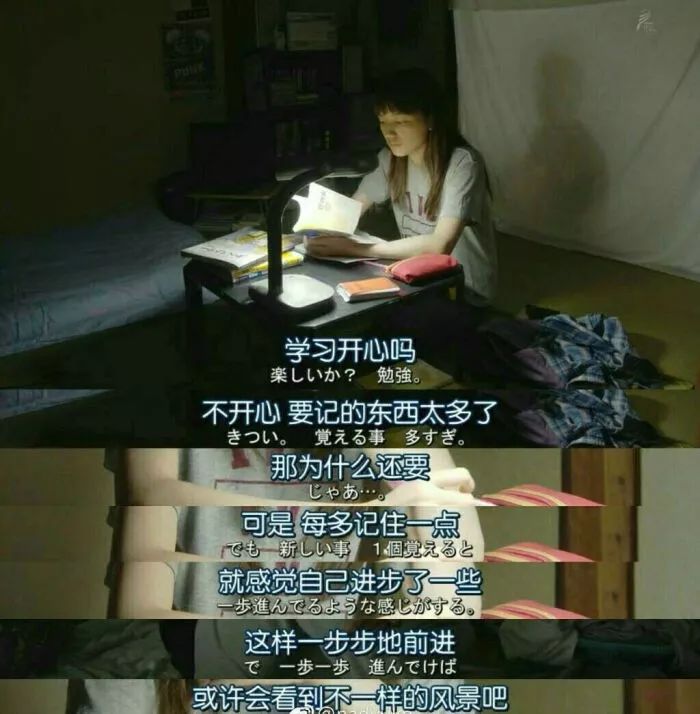
Picture source movie "Put of Spicy Girl"
7. Summary
Good at time management is very important for academic achievements. It is limited to be able to do your domination during a semester or academic year.
I am fascinated by these precious time. When I do n’t attend the attendance, I will clarify, and then get high -quality notes or lectures from others. This saves me six hours a week so that I can invest in high -efficiency and deeper learning. You may not have the conditions to do this, but if you can find out or only watch the course video, you should really consider the benefits of doing so. There are indeed disadvantages of classes, but in general, if you can choose a curriculum, you may get huge benefits.
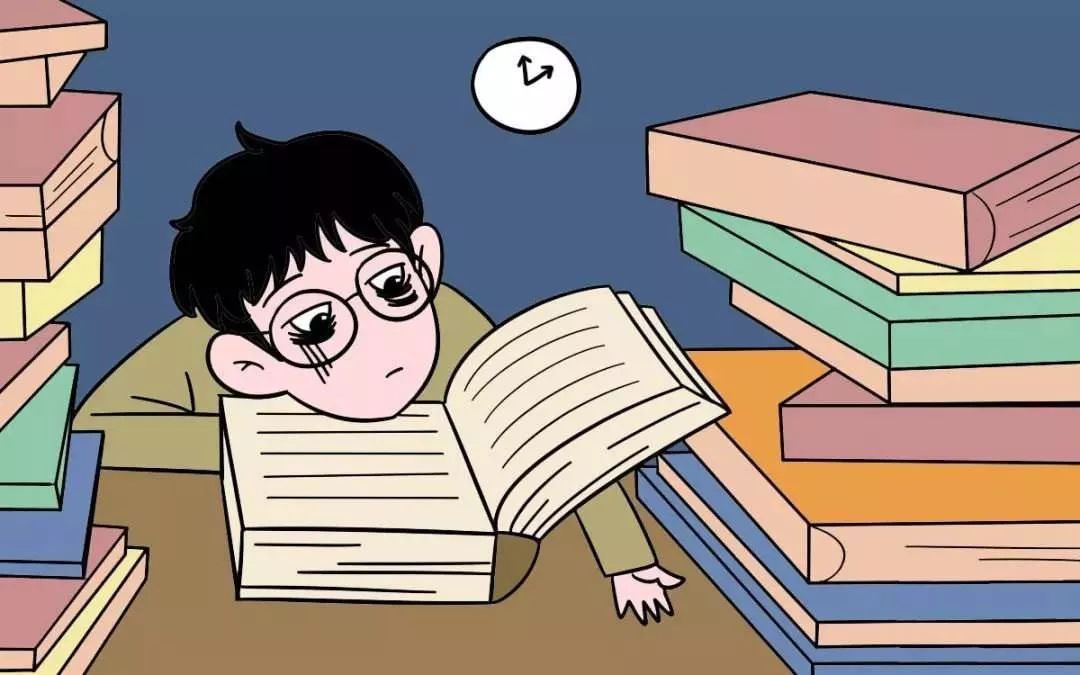
"Read only once" can save a lot of time. But when you read, you need to stop from time to time, and you need to remember the key concepts and facts for remembrance for you. But before you can fully understand a concept, don't make small cards for it.
The card is used for memorizing the concepts that has been understood, and it is not used to learn new concepts. If you don't understand a certain concept, go to other sources, authors, literatures, web pages, ads on YouTube, or any source that allows you to understand this concept. Then make a small card.
Through "read only once", make small cards, extract exercises, and repeat interval, you can establish a solid long -term memory of the knowledge and concepts you learned.
Through these strategies, you will gradually become an independent learner. Most students may only work hard for A, but you will not only take A, but also establish a personal knowledge base for life. This extensive and in -depth knowledge base will be the foundation for learning and solving problems when you have encountered new situations that have never been seen in the future. You will be a more creative person.
Creativity is usually a mixture generated by collisions of seemingly unrelated knowledge, which will give birth to new solutions. Through reflection, creation and processing, you can deepen your understanding of knowledge and expand more and more in -depth thinking patterns.
On the road to life, I am still using these methods. I believe that everyone is born to have the necessary ability to become excellent students and learners.
This article is Netease News · Netease "Each attitude" characteristic content
Click here, let friends know that you love brain science


- END -
People's Daily's key recommendation artist -Xiao Hongming

Open the three hundred years of historical suspension case filling the important g...
Tomoyang County Carry out the "15 -minute Reading Circle" series of reading days

Since July, the Cultural Tourism and Sports Bureau of Tomoyang County has carefull...