The Ministry of Education issued the "Instruction Training Plan for Graduate Students in the field of artificial intelligence (trial)"
Author:China Education Network Time:2022.08.05
A few days ago, the Department of Degree Management and Graduate Education of the Ministry of Education issued the "Notice on Printing and Distributing the" Advance Training Plan for Graduate Students in the Field of Artificial Intelligence ".

The notice pointed out that according to the "Several Opinions on the Training of Graduate Training for" Double First -class "issued by the Ministry of Education, the National Development and Reform Commission, and the Ministry of Finance, the integration of colleges and universities in the field of promoting disciplines and accelerating the field of artificial intelligence is accelerated to accelerate the cultivation of graduate students in the field of artificial intelligence." On the basis of extensive investigation and demonstration, the Special Committee studied and formulated the "Graduate Intelligence Training Plan (Trial)" and issued by the artificial intelligence field, which is now issued. Please carry out the "double first -class" construction colleges and universities in the field of artificial intelligence in the field of artificial intelligence. Based on the characteristics of the school's discipline construction and talent training, refer to the formulation and further improvement of relevant graduate training programs.
Five major cultivation directions
(1) Research on basic theory of artificial intelligence
(2) Research direction related to artificial intelligence and common technology
(3) The research direction of artificial intelligence support technology
(4) Research direction related to artificial intelligence application technology
(5) Research direction related to artificial intelligence and intelligent social governance
The full text of the file is as follows ↓
Graduate guidance training plan in the field of artificial intelligence (trial)
In order to implement the "Several Opinions on the Training of Graduate Training in the Foundation of" Double First -class Construction "issued by the Ministry of Education, the National Development and Reform Commission, and the Ministry of Finance, to further deepen the reform of postgraduate training in the field of artificial intelligence, and guide the construction of universities to strengthen forward -looking forward -looking. Basic research, achieve breakthroughs in the original results of transformation, and cultivate high -level basic theoretical talents and composite innovative talents that are urgently needed for innovative countries, and specially formulate this guiding training plan.
1. Cultivate goals
Adapt to the development trend of new technology and industrial revolution, serve the needs of major national strategies and economic and social development, especially intelligent development and transformation, and face the actual needs of original innovation, industrial upgrading and technological innovation. On the basis of the comprehensive development of Midea and labor, cultivate relevant disciplines in the field of artificial intelligence to master a solid and broad theoretical foundation and in -depth special knowledge of the system, and have the ability to engage in basic cutting -edge research, solve practical problems, and carry out cross -innovation applications. It has a high sense of social responsibility. High -level composite talents.
(1) Moral quality. Love the motherland, love the people, support the party's line, policy and policies, and establish and practice the core values of socialism. Observe the law, have a strong sense of social responsibility and career, have good moral qualities, adhere to the integrity and ethics of scientific research, strictly adhere to academic norms, have an international perspective, innovation awareness, and team spirit. Essence
(2) In terms of knowledge. On the basis of the natural and humanistic and social science knowledge of the corresponding master's degree and doctoral level, it has a solid basic theoretical knowledge and professional skills in the field of related disciplines in the field of artificial intelligence, in -depth understanding of the development direction of the art, systematically master artificial intelligence disciplines Related theoretical, technical and methods in the field of research, and have multidisciplinary cross -knowledge system and learning ability. Doctoral students highlight the academic direction of artificial intelligence international cutting -edge academic directions and advanced technical trends of the industry, understand the hotspots of international cutting -edge theories, technology, and demand; master students highlight the basic theory of this field, quickly obtain cross -disciplinary knowledge and common technologies, and be able to use them comprehensively.
(3) In terms of ability and quality. With independent scientific research ability and independent learning capabilities, including discovery and raising problems, design experiments and analysis processing data, design optimization algorithms, design and development of software and hardware, summarizing condensation and expression research results, and academic exchanges. Doctoral students highlight the original innovation capabilities, have strong system building capabilities and certain scientific research organization capabilities. They can condense scientific issues, innovate research methods, advance advanced technologies in solving major engineering practices in the industry, and carry out in -depth cross -innovation applications in multi -field With academic exchanges, you can undertake the teaching and research work of colleges and research institutions, and engage in artificial intelligence engineering technology project management. The master's degree highlights the ability to improve the comprehensive application ability, and has the ability to design, implement, test and apply verification of artificial intelligence systems, and good professional literacy and communication and collaboration capabilities. It can comprehensively use multidisciplinary theoretical technology to solve the practical problems facing the intelligentization of the industry.
(4) To adapt to the development trend of national development and artificial intelligence, in line with the specific goals of high -level talent training and positioning of high -level talents in the school or the field and related technical directions.
2. Cultivation direction
In accordance with the documents of the Ministry of Education, the National Development and Reform Commission, and the Ministry of Finance, "Deepen the connotation of artificial intelligence, build basic theoretical talents and 'artificial intelligence+x' composite talent training system, explore the new disciplinary construction and new talent training of talent training "Models" and "Guided by the application of artificial intelligence in the industry, expand core technology and innovation methods, realize the empowerment and transformation of artificial intelligence in related disciplines, and form a new model of" artificial intelligence+x 'of composite development ". Development positioning, school discipline layout, and the specific training direction of compatibility of teachers' structures can be referred to the following settings:
(1) Related direction of the basic theory of artificial intelligence, such as: artificial intelligence models and theory, the basic intelligence mathematics foundation, optimization theoretical learning method, machine learning theory, brain science and brain -like intelligence.
(2) Research directions related to artificial intelligence and common technology, such as: intelligent perception technology, computer vision, natural language understanding, intelligent control and decision -making. (3) The research direction of artificial intelligence support technology, such as: artificial intelligence architecture and systems, artificial intelligence development tools, artificial intelligence frameworks, and intelligent chips.
(4) Research direction related to artificial intelligence application technology, including but not limited to: intelligent manufacturing, robotics, driverless, intelligent network cars, smart transportation, smart medical care, machine translation and scientific computing, etc., give full play to the artificial intelligence Or the empowerment of the field to form a characteristic training direction.
(5) Research directions related to artificial intelligence and intelligent social governance, such as artificial intelligence ethics and governance based on the characteristics of artificial intelligence technology attributes and social attributes, as well as trusted security, fairness, and privacy protection.
Third, cultivation method
Artificial intelligence has the characteristics of multi -disciplinary cross -integration, penetration and support. The training unit shall, in accordance with the requirements of promoting the "deep integration of artificial intelligence and the real economy", combine the advantages of the unit, take reform as the driving force, break the discipline barriers, strengthen the integration and sharing of internal education and teaching resources, and actively promote communication between schools and enterprises, schools, and domestic and foreign exchanges at home and abroad. Cooperation, encourage schools to actively explore new models of postgraduate training in the field of artificial intelligence in the cross -border cross -border integration, cross -border integration, strengthening practice, and personalized training, and accumulate new experience.
In terms of training programs, teachers and students are encouraged to jointly formulate personalized training programs, and give students a lot of initiative to choose lessons and topics. In -depth promotion of the integration of science and education, the integration of production and education, adhere to the theoretical connection, and strengthen the training of practice and application links.
In terms of curriculum setting, strengthen the construction of the core curriculum of graduate degrees, consolidate the basic knowledge and professional knowledge of graduate students, and focus on deepening the study of artificial intelligence core knowledge, focusing on the extension of artificial intelligence theory and technology to related disciplines. Realize cross -level, interdisciplinary, and across colleges and universities, and explore that teachers of different disciplines will jointly offer interdisciplinary courses. Practical courses should be actively united with enterprises to explore industrial case teaching. Related scientific and technological ethics into teaching. See Annex 1 and 2 for the course system and core curriculum. The extension courses are set up by the training unit according to the characteristics of talent training.
In terms of teaching methods, actively carry out research, case, and practical teaching guided by project guidance, and encourage enterprise experts to participate in case teaching and practice teaching. Explore students to study by self -study and other methods, and obtain credits for curriculum learning models after strict assessment. Encourage the transformation of scientific research results and teaching results, the infiltration of scientific research methods and teaching methods, the two -way extension of teaching issues and scientific research issues.
In terms of mentor guidance, the guidance of the instructor and the instructor team is actively promoted. Encourage multi -disciplinary mentor guidance to carry out compound talent training. According to the actual situation, when forming a mentor team, actively hired enterprise mentors, foreign schools and research institutes.
In terms of scientific research and training, graduate students are encouraged to actively participate in the research of forward -looking theory, key technical breakthroughs, and major application practice issues, cultivate graduate problems, and expand their academic vision of graduate students. Ensure the intensity of basic scientific research training and consolidate graduate scientific research capabilities.
In terms of internship practice, highlighting the integration of production and education, strengthening school -enterprise cooperation, and focusing on solving the actual problems of real knives and real guns. Special internship practice links are set in the training plan to improve practical training intensity and proportion.
In terms of assessment and evaluation, it is necessary to highlight the inspection of the frontiers of innovation and technology and solve the substantial contribution of practical problems, break the method of discipline barriers and "academic papers" evaluation methods, and explore multiple evaluations and interdisciplinary evaluations. The improvement of cross -disciplinary thinking and scientific research capabilities as an important examination for doctoral students.
In terms of cultivating the environment, actively build a long -term stable training environment for interdisciplinary, wide fields, and scientific research directions, encourage the innovative models of universal reading, and cross -disciplinary, master, and blogging.
According to relevant requirements, the training unit should actively explore and classify the specific reform measures in various aspects of graduate training, and strive to take the training of artificial intelligence talents as the starting point to promote a new breakthrough in graduate education reform.
Fourth, quality guarantee and support mechanism
Emphasis on improving the construction of the quality assurance system and support system from the following aspects, and formulating specific quality supervision and support measures.
(1) Establish a strict and diverse quality view suitable for graduate training in the field of artificial intelligence, form an active and excellent quality and culture, and penetrate quality management throughout the training process.
(2) Intelligent management to ensure the training of talents in the field of artificial intelligence, and establish databases that reflect the information of graduate student status, credits, training programs, curriculum learning, experimental records, academic exchanges, special reports, research and practice, etc. Data technology realizes quality early warning and teaching and scientific research assistance.
(3) Implement the education quality evaluation centered on students 'growth and talent. While guiding the comprehensive development of students' morality, intellectual, physical and labor, and combining the characteristics of the frontier innovation and composite talent training of the artificial intelligence foundation, optimize and improve the dissertation defense system and degree degree system, degree degree system, degree degree system The evaluation committee evaluation system, cross -disciplinary degree evaluation system, and degree thesis tracking system, strengthen the selection and diversion of the training process, and ensure the quality of degree awarding.
(4) Establish an evaluation expert team with a variety of structures, profound theoretical skills, rich experience in interdisciplinary cross -practical experience, enthusiasm and responsibility, and supports support for the diversified evaluation of disciplines. (5) Strengthen graduate ideological and political education, scientific research integrity and scientific ethics education, and increase the punishment of academic dislocation.
(6) Establish a reward incentive mechanism and honor system, and increase the excellent results and contributions to the outstanding achievements and contributions to students.
(7) Establish an open education resource alliance to strengthen internal teaching and experimental facilities and data security sharing.
(8) Actively expand corporate cooperation resources, make full use of the advantages of the Internet and regions, explore the cooperation mechanism of various models, and establish a long -lasting and pragmatic cooperative relationship. Through the mechanisms of talent recommendation and the transformation of scientific research results, improve the enthusiasm of the industry to cultivate talents, optimize textbooks and series of courses, and actively attract enterprises to open industrial cases and data sets.
(9) Based on the latest trend of discipline development and changes in the needs of talent training, timely adjust the training plan.
attachment1:
Reference suggestions for graduate training curriculum system in the field of artificial intelligence
Attachment 2:
Core course reference suggestion

1. Basic Knowledge Course
(1) Artificial intelligence model and theory
This course will focus on the basic algorithms, models and theories of artificial intelligence. The content mainly includes logical reasoning with symbolism as the core, inquiry search with problems with problems, machine learning with data -driven as the core, strengthening learning with behavioralism as the core, and decision -making intelligence centered on game confrontation, as well as The combined algorithm of artificial intelligence and scientific computing.
(2) Mathematics optimization
Technologies such as machine learning, computer vision, and natural language processing are constantly developing, and optimization technology has gradually become an important mathematical foundation in the field of artificial intelligence. This course starts with convex optimization, introduces the optimization core principles, basic methods, and cutting -edge technologies, and prepares for the scientific exploration of intelligent directions. This course will help learners to correctly understand the concept of optimizing the complexity, master the basic methods of analyzing the complexity of convex optimization, and understand the solution performance of the first and second -order methods in different problems. The basic ideas of a variety of optimization methods continue to improve the ability to analyze and solve practical problems.
(3) Machine learning
This course is committed to introducing classic machine learning algorithms to allow students to initially grasp the basic methods and blueprints in the field of machine learning. By mastering the algorithm and theoretical knowledge of machine learning, you can consult and understand cutting -edge literature in related fields. At the same time, you can use related machine learning algorithms to solve the problems of popular artificial intelligence fields. Put the foundation in depth the practical problems in the work.
Second, professional knowledge courses
(1) Computer vision
Computer vision is about how to "see" the science and technology of the machine. Through the collection of the collected pictures or videos to obtain the three -dimensional information of the corresponding scene, it is an important branch of artificial intelligence. In autonomous driving, virtual reality, biometrics, safety, safety Monitoring, intelligent manufacturing and other fields play an important role. This course first introduces the development history and main applications in the field of computer vision, and then explains the main tasks and application scenarios of computer vision, including imaging principles, boundaries and curves, image classification, image segmentation, target detection, shape analysis, texture analysis, images of image weight Construction, image generation, face recognition, etc.; Focus on introducing key technical problems and major technical breakthroughs in the above main tasks. The mainstream methods of these tasks, especially the method of classification and artificial neural networks based on statistical model classification and artificial neural networks.
(2) Natural language processing
Natural language processing is about various theories and methods to achieve effective communication between people and computers with natural language. It is an important research content for artificial intelligence. The field is widely used. The specific content of the curriculum includes basic tasks such as phylics analysis, syntax analysis, semantic analysis, and verbal analysis in natural language processing, emotional tendency analysis, text summary, dialogue system, Q & A system, machine translation and other important applications to solve the basic application to be solved. Problems and difficulties, and how to use machine learning, deep learning and other means to solve various natural language treatment problems.
(3) Introduction to neural and cognitive science
This course is an entry course for neurop awareness science, which includes the cross and fusion of multiple disciplines such as cognitive psychology, neuroscience, computer science and other basic sciences. First introduce the basic concepts, historical and development status of neural cognitive science, and further explain the brain mechanism based on cognitive activities, that is, how the human brain calls components at each level, including molecules, synonyms, cells, brain tissue areas and To achieve a variety of cognitive activities, finally introduce the relevant computing models and algorithms. The course will be carried out from the aspects of cell mechanism and neuron model, brain structure and functional tissue, perception principles and models, basic theories and models, learning mechanisms and learning algorithms, concepts, structures, and applications of pulse neural networks. Deepen the understanding of cognitive neuroscience. Through the study of this course, students should master the basic connotation of cognitive neuroscience, familiarize with the study, memory and other computing models and algorithms of the brain mechanism, and at the same time inspire students Thinking of the bottleneck problems of basic theories such as information reasoning. (4) Introduction to artificial intelligence security and governance
This course will introduce the security issues of artificial intelligence systems, common offensive and defensive methods, and ethical issues caused by artificial intelligence technology, while discussing corresponding governance technologies. Through the study of this course, students can understand the security and ethics of artificial intelligence technology, and understand the relevant governance specifications and defense methods, and help the healthy development of artificial intelligence technology.
(5) Introduction to robotics and intelligent control
Robotics is an important carrier of artificial intelligence. Robotics is a high -level cutting -edge discipline. This course explains the basic knowledge and latest research results in the field of robots and control. It mainly includes robot sports and dynamics. The scene perception technology based on multiple sensor information such as vision, laser, and ultrasound uses the latest artificial intelligence methods to achieve intelligent control of robotics.
(6) Artificial intelligence architecture and system
This course explains computer system architecture and design methods that support deep learning, including artificial intelligence algorithm hardware acceleration, software and hardware collaborative intelligent computing architecture, cloud-edge-end-end intelligent system, Hou Moore era intelligent computing development trend, etc.
Source: Ministry of Education
- END -
"Liu Qinghua" is about to go to Tsinghua!
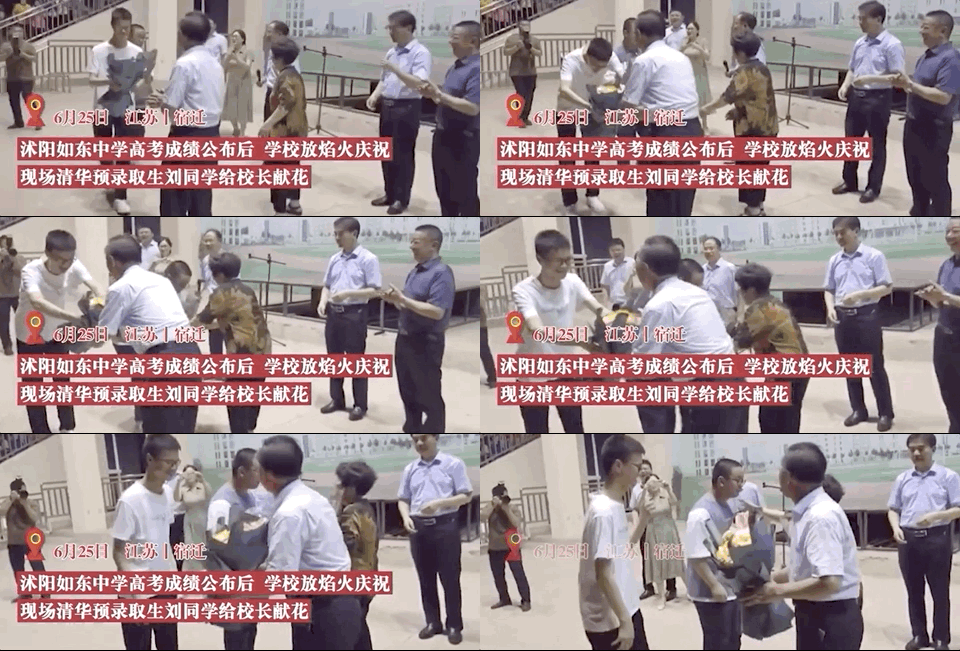
Recently, Jiangsu boy Liu ZhenaoWith a total score of 655 pointsPlan through self ...
Ministry of Education: The net enrollment rate of elementary schools in the country has increased to more than 99.9%
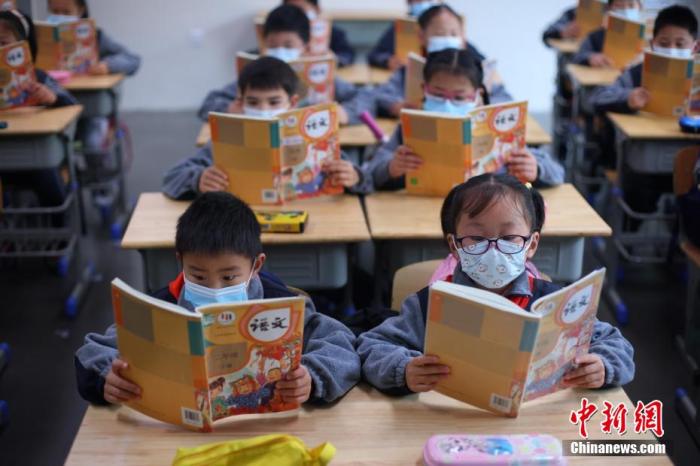
China News Service, June 21st. Lu Yugang, Director of the Department of Basic Educ...