Cooperative inheritance and protection realize the value of the Yellow River culture era
Author:Cultural Tourism China Time:2022.07.12
The Yellow River Basin spans the Qinghai -Tibet Plateau from west to east, the Inner Mongolia Plateau, the Loess Plateau and the Huanghuaihai Plain, flowing through Qinghai, Sichuan, Gansu, Ningxia, Inner Mongolia, Shaanxi, Shanxi, Henan, and Shandong. The Yellow River is the mother river of the Chinese nation and an important area for human activities and economic development.
A few days ago, the Ministry of Culture and Tourism, the State Cultural Relics Bureau, and the National Development and Reform Commission issued the "Plan for the Protection and Heritage of the Yellow River Cultural Protection and Heritage" (referred to as the "Plan"). The theme of the "Planning" is to protect, inherit well, and promote the Yellow River culture as the theme. Talking about the arrangement of the Yellow River Story in the new era, we will make arrangements to make full use of the important role of the Yellow River culture in promoting the improvement of people's livelihood, ecological protection, economic development, and social progress along the Yellow River.
1 Large ruins String the Yellow River Wenmai
The Yellow River Culture is an important part of Chinese civilization and the root and soul of the Chinese nation. At the end of last year, the key tasks mentioned in the "Fourteenth Five -Year Plan" issued by the State Administration of Cultural Relics at the end of last year are "Implementing the Yellow River Implementation of the Yellow River The cultural heritage system protection project, the construction of the Yellow River Cultural Heritage Corridor, and focus on the protection and utilization of the Yellow River Qinghai, Gansu, Inner Mongolia, Henan, and Shandong section.
"The protection of large sites should be closely linked to the main line of the ecological protection and high -quality development of the Yellow River Basin, showing the contemporary value of the site, and injecting a new connotation of the Yellow River culture." It is emphasized that according to the actual needs and development needs of site protection, utilization, and research, we should create a public cultural space that integrates protection management, research, utilization, display, and social services, and let the public understand the history of the Yellow River.
In recent years, focusing on the protection and development of the Yellow River culture, Henan Province has successively promoted the development of major archeological projects and the protection and development of large sites, and the "Archaeological China · Summer Culture Research Project" was approved, and the six active archeological excavations projects such as the Erlitou site were steadily carried out. Essence Liu Haiwang, Dean of Henan Provincial Institute of Cultural Relics and Archeology, said: "As an important carrier of the ecological protection of the Yellow River Basin and the major national strategy of high -quality development, Henan will use the Yellow River National Cultural Park as a carrier to build a highlands to build Sanmenxia -Luoyang -Zhengzhou - Kaifeng -Anyang World -Class Grand Site Park Corridor. "
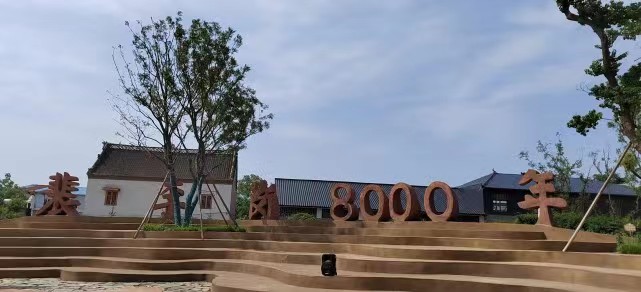
▲ Photo by Zhang Yingying, Cultural Plaza, Pei Ligang Village
On June 11 this year, the "Cultural and Natural Heritage Day", Zhengzhou's main event was held in Pei Li Gang Village, Xinzheng City, Xinzheng City, Pei Li Gang Culture. The archaeological site park focuses on the construction of protecting display projects and site museums. Through supporting basic service facilities, the surrounding environment is green and beautified, and it is open to the public. Site protection form. Up to now, Henan Province has been completed or partially built in four national archeological sites, and 9 other lists are shortlisted for the national archeological site park. Today, these national archeological sites that have been built, under construction or project have provided an important window for showing the Yellow River culture.
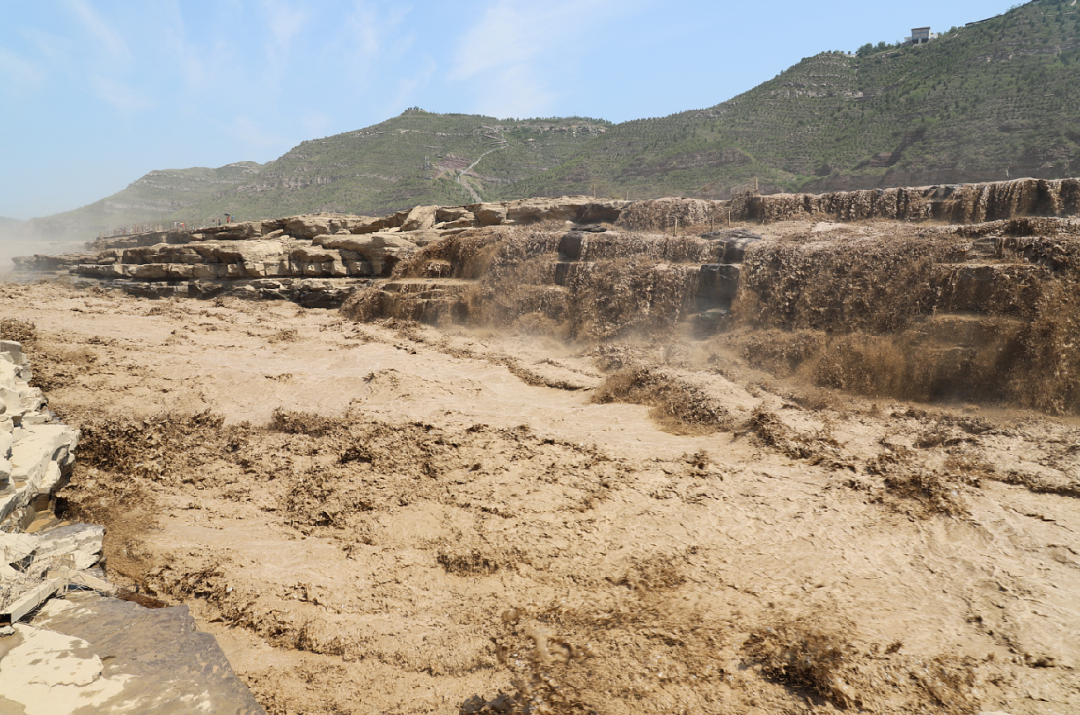
▲ Photo by Liu Yuanlong, a waterfall in the Yellow River Putou Waterfall
The dry flow of the Yellow River in Shaanxi is 719 kilometers in length, from the Lantian Ape man from about 1.15 million years ago to the Banpo Site on the bank of the Luohe River, from Shenmu Shi to Qiaoshan Huangdi Mausoleum, from the prosperity of Shaanxi in Shaanxi to China The Revolutionary Holy Land Yan'an, the starting point of Changan on the Silk Road to Chang'an in the six major ancestors of Buddhism, and the national spirit of the national spirit from the Houkou Waterfall to the meeting of the agricultural civilization and the grassland civilization in northern Shaanxi. Deputy Director Qian Jikui said: "The rich cultural heritage of Shaanxi is the 'Natural History Museum', which highlights the profound and open tolerance of the Yellow River civilization to varying degrees."
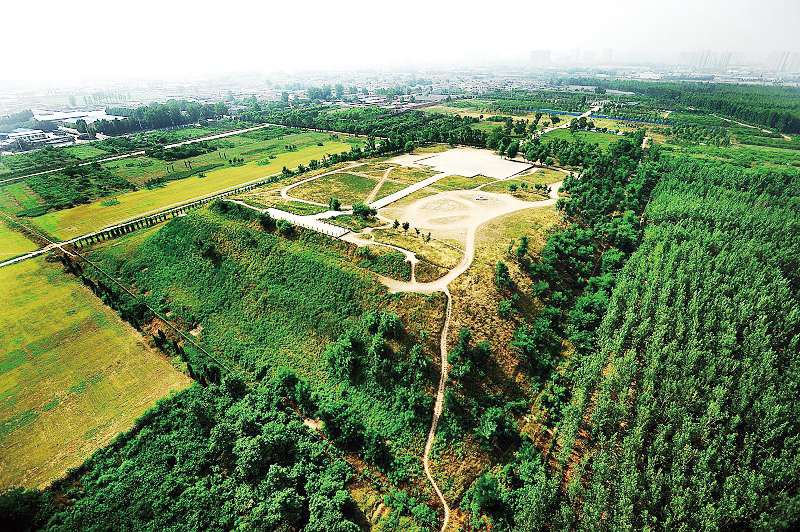
▲ Photo Conferry of the Shaanxi Provincial Cultural Relics Bureau of the Weiyang Palace of Han Chang'an City
The Shaanxi Provincial Party Committee and the Provincial Government proposed in the "Ecological Protection and High -quality Development Planning of the Yellow River Basin in Shaanxi Province" issued by the Shaanxi Province in May this year. The protection and repair of sites such as Xianyang City, Han Chang'an City, Tongwan City, Daming Palace, Great Wall, etc., and promote the work of the Shijie Site, the Emperor's Tombs of the Western Han Dynasty, and the Emperor's Tombs of the Tang Dynasty. In the construction of the National Archaeological Site Park of Weiyang Palace in Hanchang'an City, through environmental governance and ecological recovery, the site has become one of the best places for local people's leisure.
Since 2012, Xi'an has continuously promoted the protection of the national archeological sites of Weiyang Palace in Chang'an City, raised funds through various channels, and completed the relocation of nearly 4,000 villagers and more than 1,300 enterprises in 9 villages. , Clean up 3.2 million cubic meters of garbage, plant 50,000 trees, and plant more than 2.6 million square meters of lawn. "Doing a good job in the protection and utilization of archeological and large sites is one of the focus of the cultural relics work in Shaanxi Province in 2022." Qian Jikui said that in terms of improving the protection and utilization of large sites, Shaanxi will comprehensively improve the national archeological sites of Qin Shihuang and Hanyang Mausoleum and other national archeological sites. The park's protection management level is actively implemented by the Qin Yongcheng site, Han Chang'an City site and other protection display projects to create demonstration models for the protection and utilization of national first -class large sites.
The Yellow River was 843.5 kilometers through Inner Mongolia, and the basin covered the 7th league in the central and western regions, leaving a wealth of historical and cultural heritage. In order to tell the new era site to protect the Yellow River, Inner Mongolia has been acting. Cao Jianen, director of the Cultural Relics Bureau of Inner Mongolia Autonomous Region, said that the Inner Mongolia Cultural Relics Bureau will take the Great Wall, the Yellow River National Cultural Park and the National Archeological Site Park, and the protection of historical and traditional villages as the starting point to give full play to the cultural relics resources to enhance the city's cultural taste, improve the living environment, and promote the text Important role in travel integration. In July last year, the topic of "Inner Mongolia and Lindel Tuchengzi Site and Surrounding Tomb Archaeological Data Collection and Research", which was a major project of the National Social Science Fund, opened the topic in Hohhot. Inner Mongolia and Lindel Tucheng Site are located on the southern foot of the Yin Mountain and the north bank of the Yellow River. They are the largest ancient urban sites in the Yellow River Basin of Inner Mongolia. Important relics such as large buildings, houses, wells, and cellars were found in the city site. Chen Yongzhi, dean of the Inner Mongolia Museum, said: "The focus of the era of the Emperor Link Turkomo Anzi as the starting point for the establishment of a deep study of the Yellow River culture, to further promote and inherit the Yellow River culture, and improve the high -quality development of the Yellow River culture through the results of topics. ","
In March of this year, the "Ecological Protection and High -quality Development Plan" issued by the Party Committee and Government of Inner Mongolia Autonomous Region and Government clearly stated that it will fully carry out the relics of ancient cultural sites in the Yellow River Basin of Inner Mongolia and establish a database of cultural relics resources. Carry out archeological excavations and heritage research in the Yellow River Basin, participate in the implementation of major research projects of "archeological China" in the Yellow River Basin, improve the inheritance files, and strengthen the protection of ancient cities, ancient towns, ancient villages, ancient irrigation districts, ancient ferries, ancient roads, etc.
2 Construction of Chinese Culture Self -confidence identifier belt
The intangible cultural heritage along the Yellow River is an important part of the Yellow River culture. Li Hailin, an associate professor of Marxist College of Southwest University for Nationalities, said that doing a good job of non -heritage protection and inheritance along the Yellow River and telling the story of the Yellow River. The key is to adhere to the core values of socialism and find the connection point for traditional culture and modern life.
The "Fourteenth Five -Year Plan" Intangible Cultural Heritage Protection Plan proposes to strengthen the construction of cultural and ecological protection areas. Cultural and ecological protection zone refers to the centered on protecting intangible cultural heritage, which is well -accumulated in history and cultural accumulation, has a good existence state, and has an important and distinctive cultural form that has an important value and distinctive characteristics. Essence Li Hailin said: "Establishing a cultural and ecological reserve is an innovative measure in the field of non -heritage. Through regional overall protection methods, it provides non -heritage soil to make it truly integrated with modern society."
Qinghai is the birthplace of the Yellow River. Its unique geographical location and historical context show the characteristics of diversified national cultural characteristics. Separate along the Yellow River. In order to make the ancient non -heritage rejuvenation, Qinghai Province issued the "Regulations on the Intangible Cultural Heritage of Qinghai Province" and the formulation of the "Administrative Measures for the Management of Qinghai Provincial Cultural Ecological Reserve", "Identification and Management Measures for the Provincial Non -Relics Workshop in Qinghai Province" , Gradually improve the protection and inheritance system, explore and promote multiple protection methods, strengthen the construction of inheritance capabilities, and form a unique development model of Qinghai non -heritage protection inheritance.
▲ Guoluo Tibetan Autonomous Prefecture Gansal Cultural Plaza Guoluo State Committee Publicity Department of Guoluo Prefecture Confer
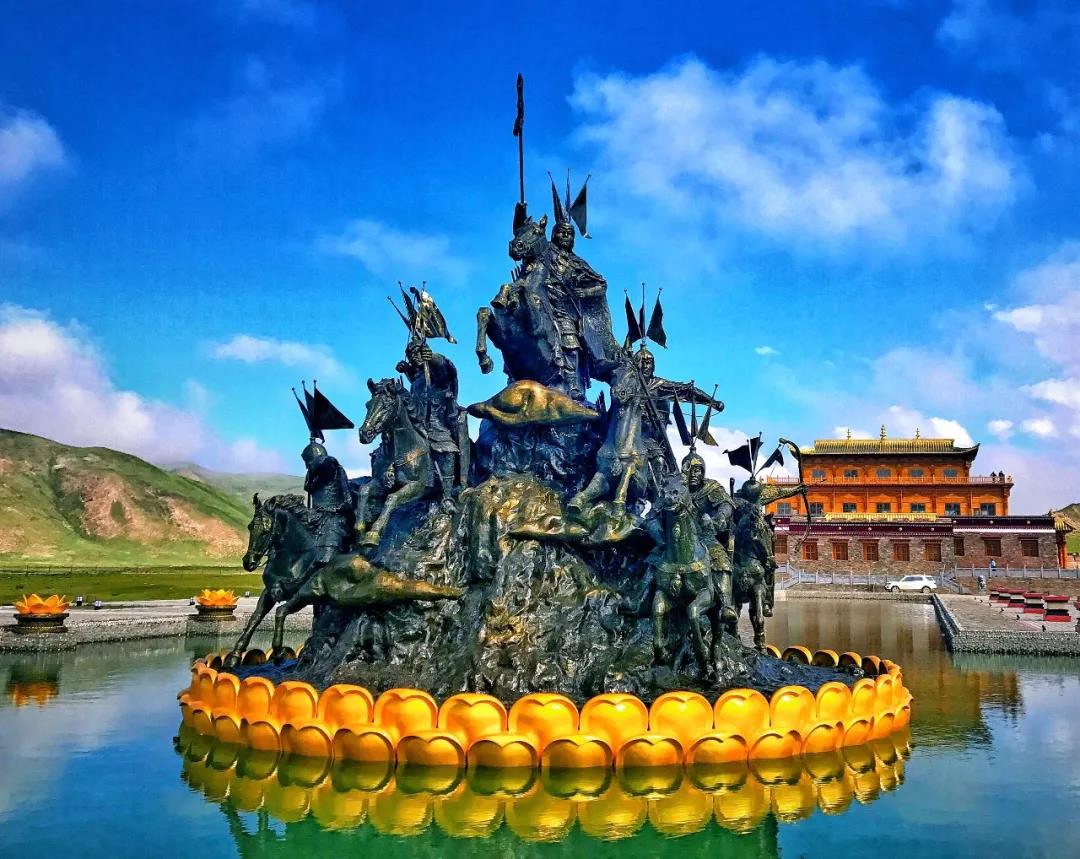
In January of this year, Qinghai Province had completed the investigation of intangible cultural heritage in the Yellow River Basin in Qinghai Province for 6 months. According to survey statistics, there are currently 2361 non -heritage in Qinghai Province, of which 88 national non -heritage projects, 238 provincial non -heritage projects, 782 non -heritage projects in municipal (state), county (district) non -heritage projects 1253 items, 3,160 representative inheritors of non -heritage. The Gesar Culture (Guolo) Ecological Protection Zone approved in July 2014 has always been an important starting point for promoting economic and social development in Qinghai. Driven by the construction of the test area, the protection of the cultural heritage of Guoluo Tibetan Autonomous Prefecture has been strengthened and the inheritance capacity has been significantly improved, and the non -heritage derivative brands are becoming increasingly screamed. A few days ago, at the meeting of the Ecological Protection and High -quality Development Leading Group of the Yellow River Basin in Guoluo Prefecture, Zhang Xiaojun, Secretary of the Guoluo Tibetan Autonomous State Party Committee of Qinghai Province, said: "We must deeply tap the value of the times contained in the Yellow River culture, and find the culture of the culture of the Yellow River. The combination point combines the construction of the Yellow River Cultural Ecological Reserve with the construction of the Gesar Cultural Ecological Protection Zone throughout the country to integrate with each other to create the Yellow River Cultural Gallery. "
Shanxi is located in the middle of the Yellow River and is an important carrying area for the protection, inheritance and promotion of the Yellow River culture. In recent years, the Shanxi Provincial Department of Culture and Tourism has actively promoted the work of the experimental zone. Overall protection development model. The Jinzhong Cultural Ecological Protection Experimental Zone is located in the main area of the Yellow River National Cultural Park. Its scope and distinctive characteristics. The experimental area continues to carry out field surveys, systematically organizes the non -heritage in the protected area, and supports non -genetic inheritors to conduct activities such as apprenticeships, teaching, and exchanges, and actively perform conditions for the inheritance obligations for the inheritance; Completed the rescue records of more than 10 national non -heritage projects including Pingyao Sae Pavilion and Turtle Lingji traditional production technology. In addition, the pilot area has organized non -heritage projects and inheritors to participate in exhibitions such as the China Anti -Heritage Expo, Chengdu International Non -Heritage Festival, Shanxi Cultural Expo and other exhibitions to continuously enhance the influence of non -heritage in the experimental area. The "Special Plan for Promoting Promoting Promotion of Intangible Cultural Heritage in the Yellow River Basin of Shanxi Province (2021-2035)" introduced earlier this year is clear that in the future, the overall requirements, key tasks and guarantee measures of non -heritage protection in the Yellow River Basin of Shanxi. "In the past, many people felt that non -heritage was a bit soil and could not go to the table, but now, more and more people like non -heritage and feel the cultural charm contained in non -heritage." Wei Caihua, a professor at the School of Literature of Shanxi University, said that according to " Planning, in the future, protects, inherit and promote the non -heritage of the Yellow River Basin in Shanxi will be more comprehensive, rational, and systematic.
At present, the Yellow River Basin's Intangible Cultural Heritage Protection Exhibition Center, located in Luoyang City, Henan Province, is stepping up the renovation construction. It is expected that the museum will be opened for trial operation in October this year. Not long ago, the "Protection and Horosity Promotion Plan for the Protection of Intangible Cultural Heritage in the Yellow River Basin" issued by the Henan Provincial Culture and Tourism Department proposed that by 2025, the system of non -heritage protection and inheritance and promotion system for the Henan Yellow River Basin was basically established. "It is necessary to use the national cultural ecological protection zone as the core to build the Chinese cultural self -confidence identification belt." Liang Liike, the dean of Luoyang Normal University, suggested that in the next step, it is necessary to vigorously promote the Jun porcelain and Ru porcelain culture ecology represented by Yuzhou and Ruzhou. Protecting the experimental area, the folk cultural ecological protection experimental area represented by Huaiyang and Junxian, and the jade carving cultural ecological protection experimental area represented by Nanyang Zhenping to strengthen the inheritance of non -heritage activity.
▲ Bird's view of the small wave bottom water conservancy hub small wave bottom water conservancy hub management center
3 turn cultural tourism resources into economic and social development advantages
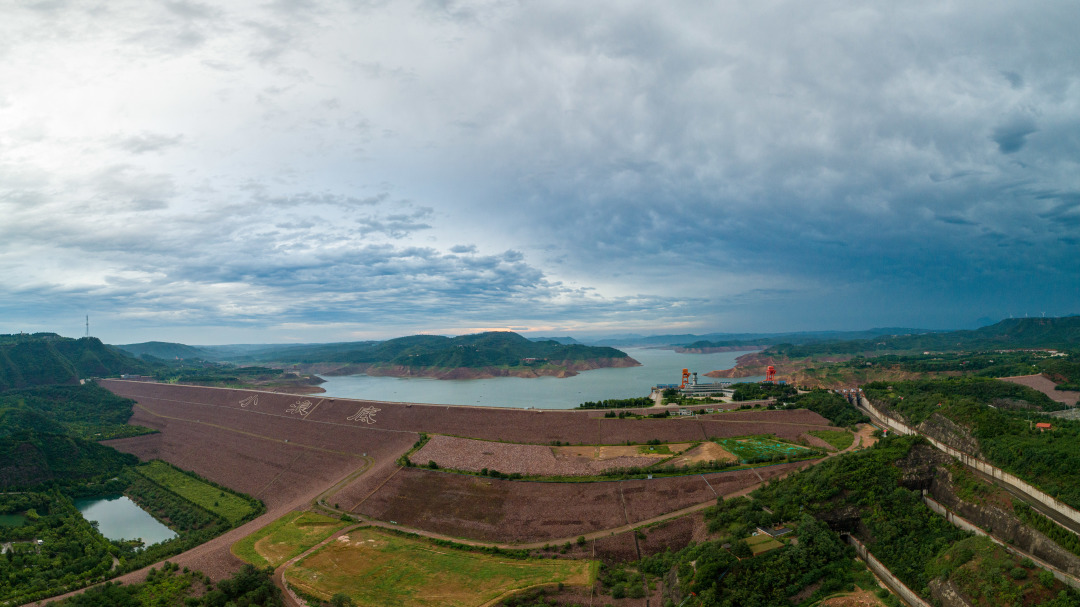
▲ Figures of the Cultural and Tourism Bureau of Dongying City, Huanghekou, Dongying City
The star of the Yellow River Basin and its distinctive cultural heritage provides superior conditions for regional cultural development, and also provides strong cultural support for regional economic and social development. "We must transform rich cultural resources into a rich advantage in economic and social development." Li Hailin pointed out that tourism is undoubtedly an important means to drive development and benefit people's livelihood. Culture is the soul of tourism, and tourism is the carrier of culture. It is necessary to better protect, inherit, and promote the Yellow River culture, and it is inseparable from the comprehensive development of tourism. Wang Zhenjun, director of the Zhengzhou University Cultural Industry Research Center and director of Henan Province Intangible Cultural Heritage Base, said: "Good protection, inheritance, promoting, and developing the Yellow River culture is to do a good job of two major articles in the cultural industry and tourism industry, and truly realize the culture The integration of tourism with tourism. "
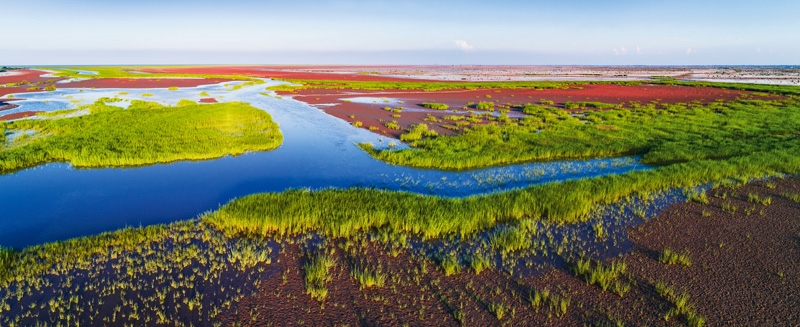
▲ Hohhot Old Niowan Tourist Area Hohhot Cultural Tourism, Radio, Film and Television Bureau confidence in Hohhot
In Johe County, the Tibetan Tibetan Autonomous Prefecture, Sichuan Province, the Yellow River formed the magnificent landscape of "Jiuqu Yellow River" with a 180 -degree turn; in Hohhot, Hohhot, Inner Mongolia, the estuary of Toto County is the dividing point of the middle reaches of the Yellow River. The Yellow River via the Toto County to the south of the Jin and Shaanxi Canyon. It is magnificent and spectacular. In Yichuan County, Shaanxi Province, the surging Yellow River water flows down with sediment, forming a golden -yellow waterfall group with a stretch of 100 meters; In Yingkou, Shandong Province, the National Nature Reserve of the Yellow River Delta is the "bird of birds". There are all kinds of states, and snow mountains, wetlands, grasslands, waterfalls, etc. are reflected with cultural relics.
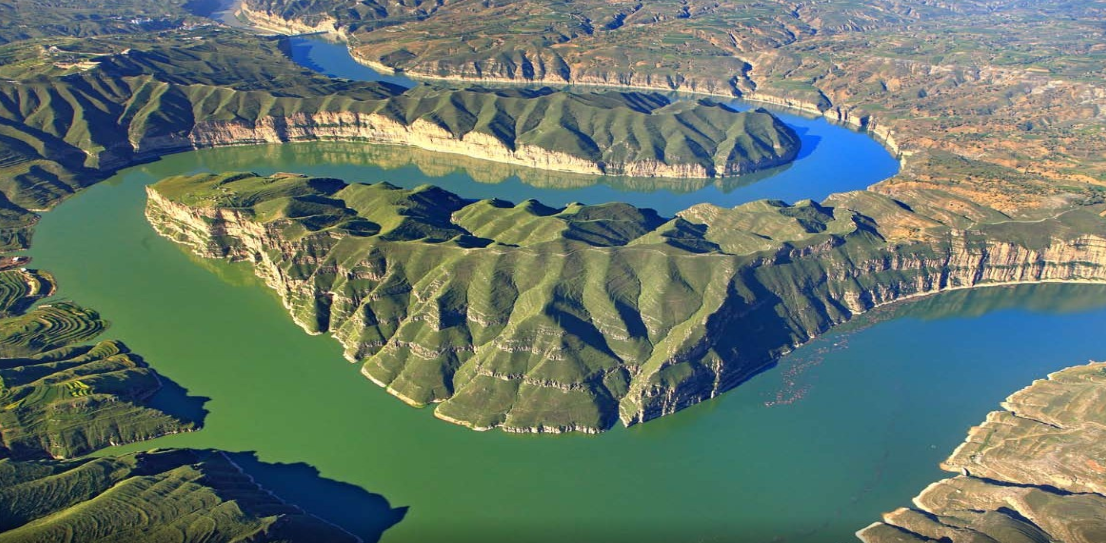
According to statistics, the Yellow River Basin has 20 world heritage, more than 300,000 non -mobile cultural relics, 649 national non -heritage representative projects, 84 national 5A tourist scenic spots, 9 national tourism resorts, nationwide rural villages 329 key tourism villages, 85 national red tourism classic scenic spots ... Rich cultural tourism resources have laid a solid foundation for the construction of the Yellow River Cultural Tourism Belt.
In June last year, the Ministry of Culture and Tourism released 10 national tourist routes of Yellow River theme, including the journey of Chinese civilization, the tour of the Yellow River ecological and cultural journey, and the tour of the rural revitalization of the Yellow River. In addition, the "Road Book of the Yellow River Cultural Tourism Tourism with Tourism" is also released, covering the itinerary planning, the introduction of road conditions, and the game, etc., attracting more tourist enthusiasts to discover and explore the beauty of the Yellow River culture and nature.
In June 2021, Inner Mongolia launched a 4 -month "2021 · Inner Mongolia Yellow River Board Ecological Cultural Tourism Season", relying on Inner Mongolia to organize a variety of activities along the 7th league in Inner Mongolia, to fully display the Yellow River culture of Inner Mongolia at home and abroad Unique charm; on June 28, 2022, Yuncheng Shanxi Yuncheng held a symposium to build the Yellow River boutique tourist route. The meeting proposed that Yuncheng will take the Yellow River No. 1 tourist highway as a link to launch the Yellow River tourist boutique line to create new products, new routes, new lines, and new lines of Yuncheng tourism. New brand; on July 9, 2022 China · Yinchuan's 6th Yellow River Cultural Tourism Festival officially opened. Traveling activities are dizzying. The "Outline of Ecological Protection and High -quality Development Planning" issued by the Central Committee of the Communist Party of China and the State Council in October last year stated: "Promote the integration of culture and tourism, and build the cultural tourism industry into a pillar industry. The development of global tourism, build a number of iconic tourism destinations that show the Yellow River culture. "In response, Zhang Hui, Dean of the Modern Tourism Research Institute of Beijing Jiaotong University, judged:" Cultural tourism and natural tourism are the two major market themes. These two resources will have more high -quality products that integrate cultural tourism in the future. "
However, it is necessary to pay attention to the high content of the Yellow River and the relatively weak ecological foundation. To make the Yellow River a happy river for the benefit of the people, the key is to protect the good ecological environment of the Yellow River. Therefore, the use of the cultural and tourism resources of the Yellow River Basin, while creating more excellent cultural products and high -quality tourism products, it is undoubtedly the most exciting to bring improvement and assistance to the ecological protection of the Yellow River Basin. "The tourism industry has the characteristics of resource conservation and environmental friendliness, and should use tourism to help push the ecological protection and high -quality development of the Yellow River Basin." Song Rui, director of the Tourism Research Center of the Chinese Academy of Social Sciences, pointed out that it is necessary to give full play to the ecological protection and high quality of tourism in the Yellow River Basin The important role in development needs to be valued from the aspects of overall planning, cultural construction, ecological protection, regional division of labor, major projects, cooperation mechanisms, and product development.
Strengthening the cultural industry and tourism industry is conducive to the protection of development and development in protection, and can effectively alleviate the burden on the development of industries to the Yellow River water resources. At the same time, let people cultivate and enhance environmental protection awareness in the process of participating in the Yellow River cultural tourism, allowing environmental protection and economic development to complement each other, so as to better protect the mother river. Song Rui reminded: "Tourism development should coordinate the coordinated governance of environmental pollution along the landscapes, forests, lakes and grass along the yellow area, and conduct on the premise of implementing water ecology, water resources, water environment, and water disasters. Evaluation and capacity control, try to develop low -density, small scale, deep experience, low impact, green tourism. "
"China Culture News" on July 12, 2022
The 8th version published a special report
"Cooperative Inheritance and Protection Realize the Value of the Yellow River Culture Age"
↓ ↓ ↓ ↓ ↓ according to
Editor -in -chief: Chen Xiaoyue
- END -
Why isn't interesting social business a good business?

New Eye Young Group WorksAuthor | Ye JingEdit | Sang MingqiangSince the birth of the...
Qufu City Hospital of Traditional Chinese Medicine conducts sensory knowledge training for internship students
In order to improve the sensory consciousness of internship students and consolida...