Service Trade Meeting time | Dialogue Pwi Yongdao Golden Army: There will be more than 4 first -tier cities in China
Author:Zhongxin Jingwei Time:2022.09.02
Zhongxin Jingwei, September 2 (Xue Yifei) From August 31st to September 5th, the 2022 China International Service Trade Fair (hereinafter referred to as the service trade association) hosted by the Ministry of Commerce of China and the Beijing Municipal People's Government was held in Beijing Essence On the morning of the 2nd, the "City 2022" (hereinafter referred to as the report of the China Development Research Foundation and Pricewaterhouse Nanjing, Chengdu, Ningbo, Suzhou, Wuhan, Hong Kong, Chongqing, Changsha, and Zhengzhou are ranked 1-14 on the list of observation lists, with great development potential.
At the meeting, Kim Jun, a Chinese partner of PricewaterhouseCoopers, said in an interview with the Sino -Singapore Jingwei that from the performance of many indicators, the new first -tier cities performed well in urban planning and sustainable development. The gap between first -tier cities is narrowing, and it is foreseeable that there will be more than 4 first -tier cities in China, and more world -class cities will emerge.
There will be more than 4 first -tier cities
"City of Opportunities" is a research report conducted a comprehensive follow -up observation of Chinese cities and published by the China Development Research Foundation and PricewaterhouseCoopers. Since 2014, it has been released for 9 consecutive periods. The research method of the report uses PwC City Assessment tools to observe the selected cities.
The report observes 47 cities, covering central cities and node cities of many major city agglomerations in China. The results of the report are still in the top four cities: Beijing, Shanghai, Shenzhen, and Guangzhou. The ten subsequent sections are: Hangzhou, Nanjing, Chengdu, Ningbo, Suzhou, Wuhan, Hong Kong, Chongqing, Changsha, Zhengzhou. Ningbo has entered the top ten cities for the first time and has a strong development momentum.
In terms of sub -indicators, the top five cities in "Intellectual Capital" are Beijing, Guangzhou, Wuhan, Shanghai, and Nanjing; the top five "technology and innovation" are Shenzhen, Guangzhou, Beijing, Shanghai, Hangzhou; The top five are Shanghai, Guangzhou, Chongqing, Beijing, Shenzhen, and Chengdu (tied for fifth); the top five "urban toughness" are Hong Kong, Beijing, Shanghai, Tianjin, Shenzhen; It is Nanjing, Xiamen (tied first), Suzhou, Chengdu, Ningbo; the top five "sustainable development" are Ningbo, Dongguan, Shanghai, Shenzhen, and Suzhou; Guangzhou, Shenzhen, Hangzhou; the top five "economic influence" are Hong Kong, Shanghai, Beijing, Shenzhen, and Hangzhou; the top five "cost advantages" are Hohhot, Tangshan, Baoding, Taiyuan, Shijiazhuang; The top five are Shenzhen, Shanghai, Suzhou, Beijing, Hangzhou.
Jin Jun pointed out that at present, the gap between first -tier cities and new first -tier cities is getting smaller and smaller, and the narrowing range is very obvious. "Five years ago, there was still a big gap between the new first -tier cities and the first -tier cities, but at present, these gaps are getting increasingly increasing The smaller. This trend shows that more world -class cities will be born in the future in China. "
The new first -tier cities are outstanding on some indicators. He said to Zhongxin Jingwei that one is that in terms of urban planning, new first -tier cities will build cities with higher operating efficiency. They will build some new areas or new cities, and consider sustainable development in planning; third, the cities in the Greater Bay Area, Central and Southern China attach great importance to the living and livable environment, and they have done a good job. Essence He judged: "There will be no four first -tier cities in China, and there will be more."
Jin Jun summarized several key factors affecting urban development. The first is technological innovation capabilities. If the city wants to develop, it must have the ability to continue to innovate; the second is intellectual capital, that is, the foundation of the talent training of the city; the third is the operating efficiency. It is very important to be able to respond to emergencies quickly; the fourth is service capabilities, comprehensive service capabilities of residents, enterprises and other related parties, so that citizens have a comfortable and efficient life, and create a good business environment for enterprises.
Where is the opportunity in the northern cities?
From the above 14 cities, it can be seen that except Beijing and Zhengzhou, the remaining 12 cities are southern cities.
Jin Jun said that the economic development of the north and the south did not mean that there was no chance in the northern cities. "For the northern cities, one is to do a good job of technological innovation and transform technology into the basis of industrial development; the other is to do a good job of cultivating talents and attract talents. Outflow, if there is a better mechanism for talents to return, it will be an opportunity for northern cities. "
At the same time, the north still maintains its advantages in some aspects. In the "cost advantage" dimension selected in the 10 observation dimensions selected, Hohhot, Tangshan, Baoding, Taiyuan, and Shijiazhuang ranked 1-5, indicating that the cost of these cities is better. Jin Jun said that in the past, everyone would think that the cost of Northwest China was very low, but now it is more advantageous in North China, which is related to its geographical location. North China can use this advantage to make efforts in some subdivided industries.
At present, the construction of urban agglomerations is becoming more and more important. In many urban agglomerations in China, the Yangtze River Delta, the Guangdong -Hong Kong -Macao Greater Bay Area is a better area. The report pointed out that in terms of comprehensive observation results, regional central cities have gradually presented different development characteristics. The Yangtze River Delta, Guangdong -Hong Kong -Macao Greater Bay Area, etc. present a multi -center characteristics with the same population scale and relatively balanced development of multiple cities. The obvious "rainbow absorption" model, while some provincial capital cities attract talents, have also attracted the talents in the province to concentrate towards the provincial capital. Jin Jun said that the central cities in the urban agglomeration cannot carry all industries and need to do a good job in industrial spillover and industrial coordination. The Yangtze River Delta, the Guangdong -Hong Kong -Macao Greater Bay Area is more obvious. In the future, other new urban agglomerations can be reference.
He also believes that in the industry, the Yangtze River Delta, the Guangdong -Hong Kong -Macao Greater Bay Area is characterized by the division of labor in the market -oriented industry. It is a high -end manufacturing. Wuxi and Changzhou do other. This division of labor has not formed mutual competition, but has opened up the industrial chain and forms differentiated development. Cities in North China may have insufficient development in the development of high -end manufacturing, but due to the cost advantage due to cost advantages, it has the advantage of cost advantages. You can lay out on the specific segmentation track. "(For more reports, please contact the author [email protected]) (Zhongxin Jingwei APP)
Copyright Copyright Copyright, without written authorization, no unit or individual may be reprinted or extracted in other ways.
Editor in charge: Luo Yan
Pay attention to the official WeChat public account of JWVIEW (JWVIEW) to get more elite financial information.
- END -
Yanqing Xiujiu Ancient Temple 23 folk murals
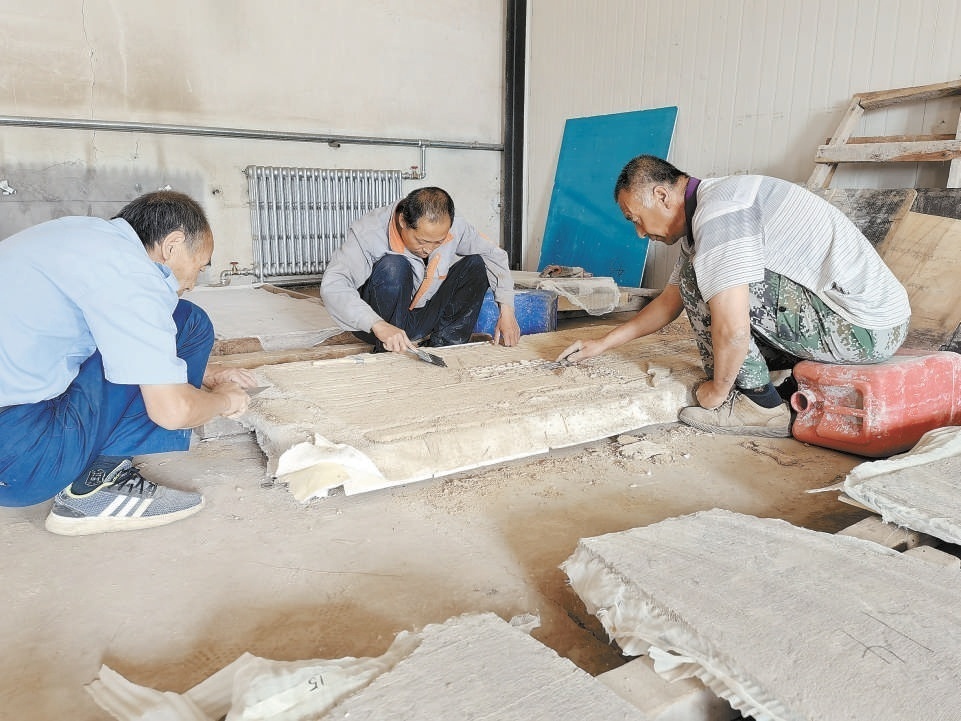
The technical staff is cleaning up the ground.The technician is cleaning up the su...
Modeling of youth | Meng Xiang Yaoshan: There is light in my heart, and the past
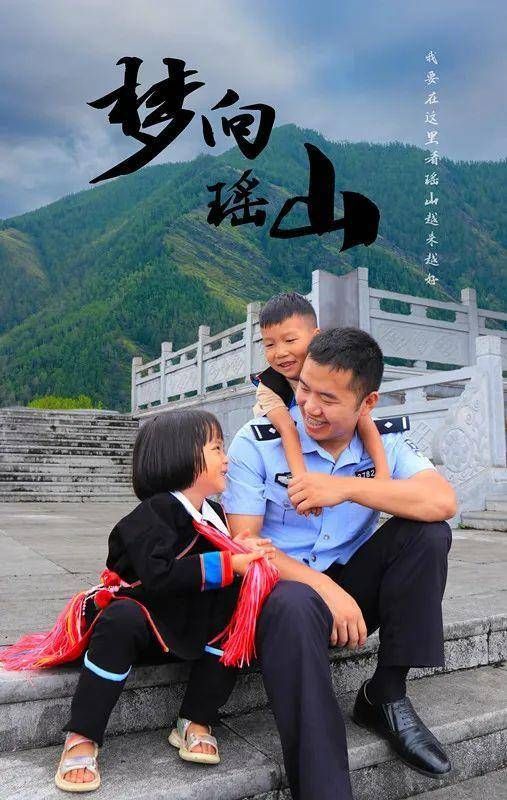
I want to see Yaoshan better and better here. The guy and children in the Tibetan ...